
Types of psychotherapy for anxiety can help you understand what triggers your symptoms, reduce avoidance, and build healthier ways to cope. The best approach depends on whether your anxiety shows up as constant worry, panic, social fear, burnout, or physical tension that never seems to switch off.
Types of psychotherapy for anxiety
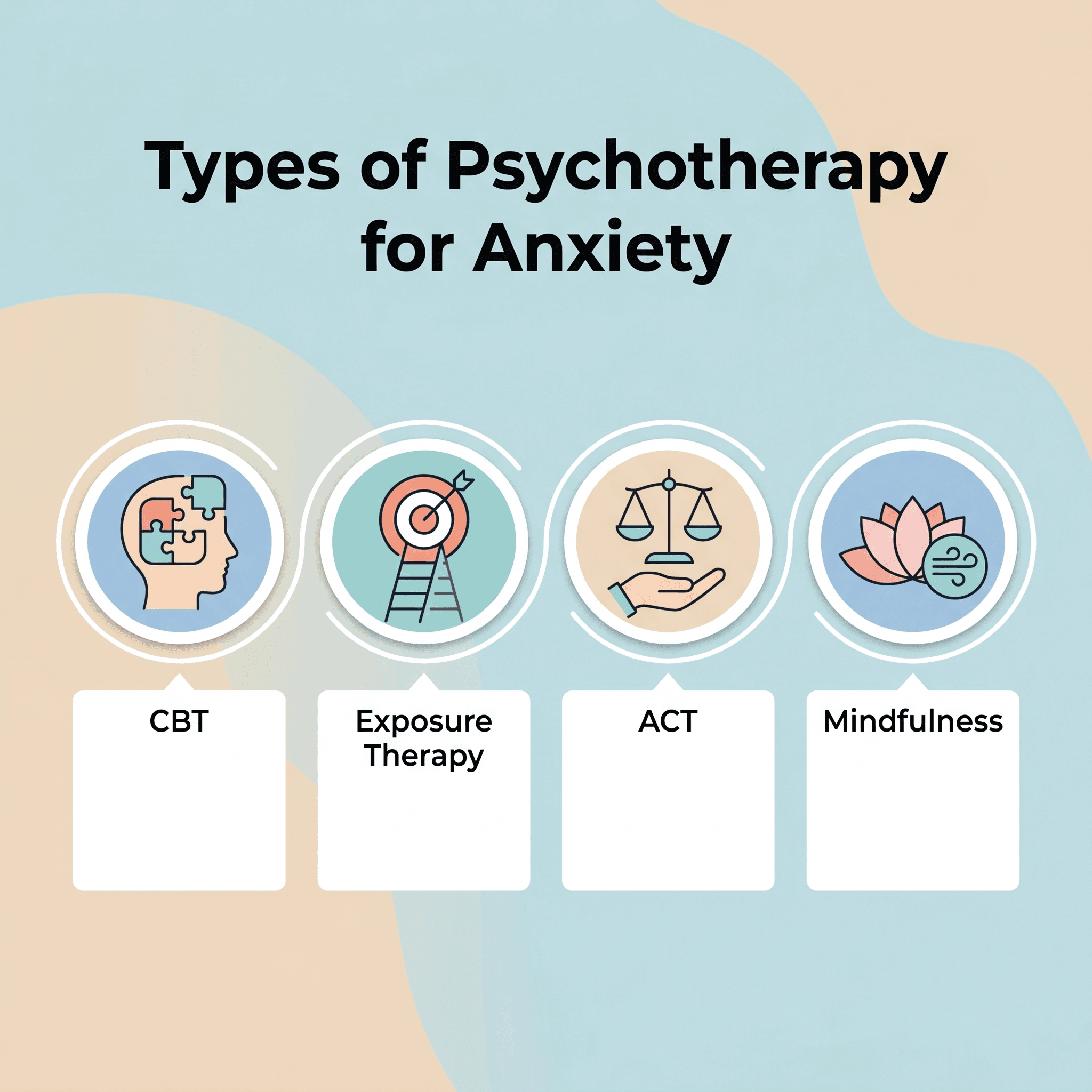
There are several effective approaches to managing anxiety, and the right one depends on your symptoms and preferences. Types of psychotherapy for anxiety include CBT, exposure therapy, ACT, mindfulness-based therapy, and psychodynamic therapy.
For a broader overview of therapy options, see Healthline’s guide to psychotherapy for anxiety, which breaks down the main approaches in a clear and practical way.
Cognitive behavioral therapy
Cognitive behavioral therapy, or CBT, is one of the most widely used approaches for anxiety. It helps you notice distorted thoughts, challenge worst-case thinking, and replace anxious behavior patterns with more balanced responses.
CBT works especially well when anxiety is driven by overthinking, perfectionism, or persistent worry. It is also a strong option when you want a structured, practical method with measurable progress.
Exposure therapy
Exposure therapy helps you gradually face situations, sensations, or thoughts you fear instead of avoiding them. Over time, this can reduce the power anxiety has over your choices.
This approach is especially useful for phobias, panic, and social anxiety. It pairs well with reduce stress with mindfulness, because mindfulness can support emotional regulation during exposure work.
Acceptance and commitment therapy
Acceptance and commitment therapy, or ACT, teaches you to stop fighting every anxious thought and instead focus on living according to your values. This can be useful if anxiety gets worse when you try to control or suppress it.
ACT is especially relevant for readers who feel stuck, overwhelmed, or emotionally drained. A natural supporting link here is self-care routine for anxiety and burnout.
Mindfulness-based therapy
Mindfulness-based approaches help you observe anxious thoughts without immediately reacting to them. They can reduce mental spirals and make it easier to return to the present moment.
If your audience wants simple daily actions, link this section to easy daily mental wellness habits and holistic wellness habits.
Psychodynamic therapy
Psychodynamic therapy looks deeper at the emotional patterns, past experiences, and unresolved conflicts that may be feeding anxiety. It is usually less structured than CBT and may take longer, but it can be useful for people who want deeper insight into their stress patterns.
This is a good place to connect with a broader self-development angle. Linking to self-care for emotional exhaustion works well here because emotional depletion often overlaps with hidden anxiety.
How to choose therapy
The best therapy for anxiety depends on the root of the problem and the kind of support you want. CBT and exposure therapy are often strong choices when fear and avoidance are the main issues, while ACT, mindfulness, or psychodynamic therapy can fit better when anxiety is tied to values, emotional strain, or deeper patterns.
If anxiety is showing up alongside burnout or constant stress, a link to digital detox for burnout: 7-day plan can give readers a practical next step. You can also support this section with chronic stress and adrenal health for readers who want to understand the physical side of long-term stress.
What to expect in therapy
In the first sessions, a therapist will usually ask about your symptoms, stressors, goals, and what you have already tried. They may then recommend a structured plan, gradual exercises, or a mix of techniques depending on your needs.
Therapy works best when it matches your lifestyle and feels realistic to follow. If readers want a broader reset, easy daily mental wellness habits is a helpful article to place here because it supports consistency between sessions.
When self-care helps too
Therapy is powerful, but daily habits still matter. Sleep, movement, less screen time, and stress reduction can make it easier to stay regulated while you work on anxiety.
That is where internal links can strengthen the article naturally. Use calm your nervous system, reduce stress with mindfulness, and self-care for emotional exhaustion as supportive resources.
FAQ
What is the most effective psychotherapy for anxiety?
CBT is one of the most widely used and best-supported approaches for anxiety.
Can therapy help without medication?
Yes, many people manage anxiety with therapy alone, especially when symptoms are mild to moderate.
How long does therapy take?
The timeline depends on the therapy type, the severity of symptoms, and how consistent you are with sessions and exercises.
Can I combine different types of psychotherapy for anxiety?
Yes, many therapists use an “integrative” approach, meaning they combine techniques from CBT, mindfulness, and other methods to create a plan that fits your specific needs.
How do I know if therapy is working?
Progress often happens in stages. You might notice you’re able to handle stress a bit better, your physical symptoms of anxiety decrease, or you feel more equipped to challenge anxious thoughts when they arise.
Is online therapy as effective as in-person for anxiety?
Research shows that online therapy is highly effective for many anxiety disorders, offering the same therapeutic benefits while being more convenient and accessible.
Still not sure which approach is right for you? Contact us here to ask questions or learn more about our mental wellness resources.
Want more inspiration for your mental wellness journey? We share daily tips, easy healthy recipes, and strategies to help you live your best, most balanced life.
- Follow us on Instagram for daily wellness motivation and recipe inspiration.
- Join our Facebook to connect with a community focused on healthy, mindful living.