
Key Takeaways
- 30 plants per week gut health: Eating 30 different plants weekly is the single most effective dietary change you can make to improve your gut microbiome. A landmark study from King’s College London and ZOE found that a 30-plant diet increased beneficial gut bacteria more than a probiotic supplement.
- Diversity beats quantity: It’s not about eating more fiber — it’s about eating different fibers. Each plant feeds different bacteria.
- How to start: Add 5 new plants per week. Herbs, seeds, and spices count.
- The one thing to do: This week, add 5 new plants to your meals. Use our checklist below.
The 30-Plant Rule Explained
30 plants per week gut health is a simple, science-backed target that has transformed how we think about gut health. Instead of focusing on a single “superfood,” the 30-plant rule emphasizes variety. Each plant contains different fibers, polyphenols, and nutrients that feed different beneficial bacteria in your gut.
The rule was popularized by researchers at King’s College London and the American Gut Project. Their findings were clear: people who ate 30 or more different plants per week had significantly more diverse gut microbiomes than those who ate fewer than 10. And diversity is the hallmark of a healthy gut.
This article will explain the science, show you exactly how to reach 30 plants per week, and give you a 7-day plan to get started. If you’re new to gut health, read our complete guide: How to Improve Your Gut Health Naturally.
The Science Behind 30 Plants Per Week Gut Health
The King’s College London & ZOE Study
In a 2026 study, researchers compared two groups: one ate a diverse plant diet (30+ plants per week), and the other took a daily probiotic supplement. The results were published by EurekAlert and showed that the plant group had significant increases in beneficial bacteria — while the probiotic group showed no meaningful change.
The conclusion: diversity of plants is more powerful than any single probiotic strain.
The American Gut Project
The American Gut Project analyzed thousands of stool samples and found that people who ate 30+ plants per week had more diverse microbiomes than those who ate 10 or fewer. The study also showed that diet was the strongest predictor of microbiome composition — stronger than age, weight, or even antibiotics.
Why Plant Diversity Matters
Each plant contains different types of fiber (soluble, insoluble, resistant starch, inulin, etc.) and polyphenols. Different gut bacteria prefer different substrates. When you eat a wide variety of plants, you feed a wide variety of bacteria. This leads to:
- Increased microbial diversity
- Higher production of short-chain fatty acids (SCFAs) like butyrate
- Stronger intestinal barrier
- Better immune regulation
- Improved mood and sleep
For more on the gut-brain connection, see our article on Chronic Stress and Adrenal Health.
How to Reach 30 Plants Per Week
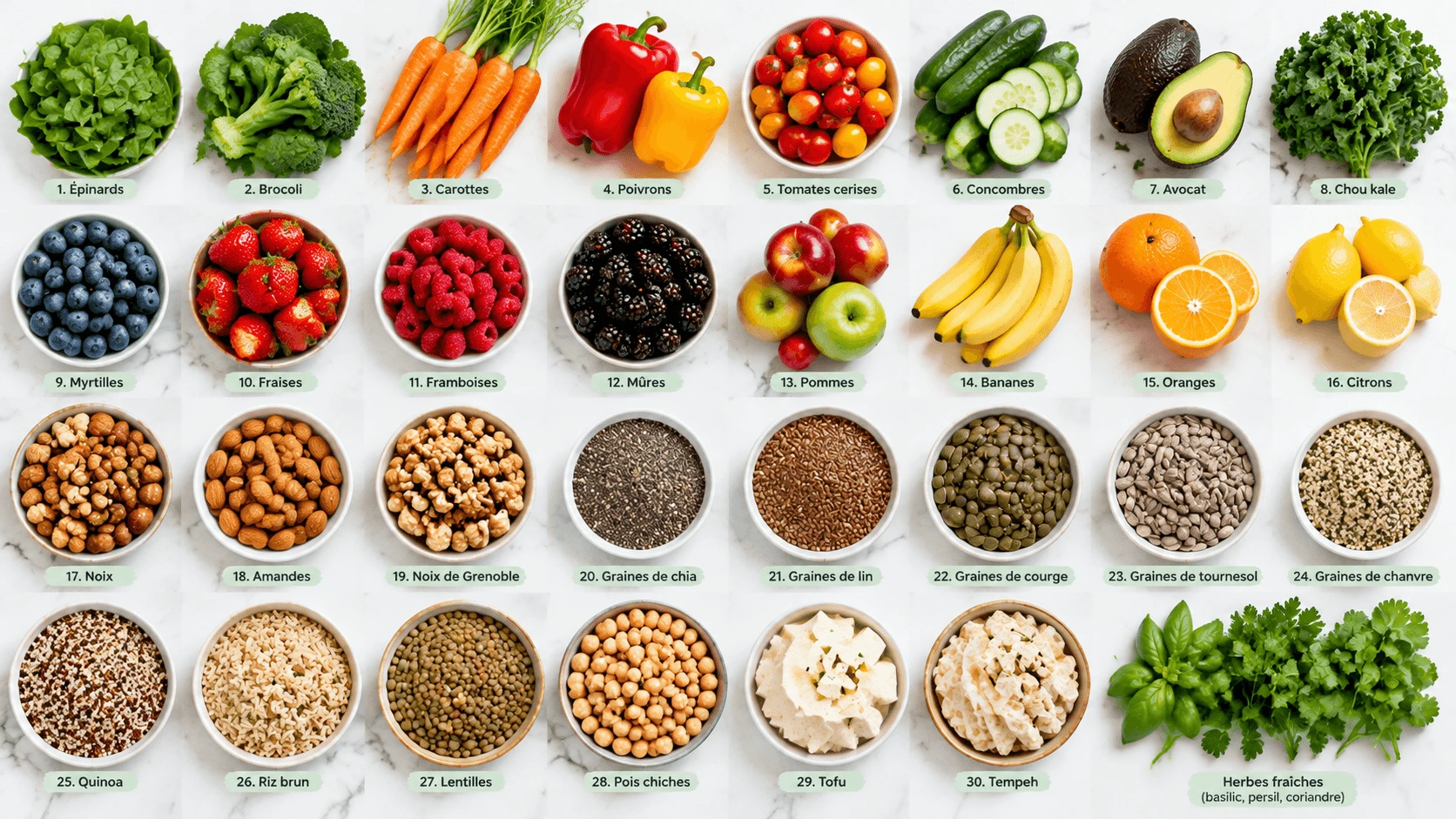
It’s easier than you think. Plants include vegetables, fruits, whole grains, legumes, nuts, seeds, herbs, and spices. Even coffee and dark chocolate count (in moderation).
Plant Categories and Examples
| Category | Examples | How to Add |
|---|---|---|
| Vegetables | Spinach, kale, broccoli, cauliflower, carrots, bell peppers, zucchini, asparagus, leeks, garlic, onions | Add a new vegetable to your salad or stir-fry each day. |
| Fruits | Berries, apples, bananas, oranges, kiwi, mango, pineapple, pomegranate | Mix different fruits into your breakfast or snacks. |
| Legumes | Lentils, chickpeas, black beans, kidney beans, edamame, peas | Use in soups, salads, or as a side dish. |
| Whole Grains | Oats, quinoa, brown rice, barley, buckwheat, millet, teff | Swap refined grains for whole grains. |
| Nuts & Seeds | Almonds, walnuts, chia seeds, flaxseeds, sunflower seeds, pumpkin seeds | Sprinkle on yogurt, oatmeal, or salads. |
| Herbs & Spices | Basil, cilantro, parsley, turmeric, ginger, cinnamon, cumin, oregano | Use fresh herbs generously; they count as plants. |
| Fermented Plants | Kimchi, sauerkraut, miso, tempeh | These count as plants and also provide probiotics. See our Fermented Foods for Gut Health article. |
Tips to Hit 30 Plants Without Overthinking
- Count everything: A sprinkle of chia seeds, a handful of spinach, a dash of cinnamon — they all count.
- Mix it up: Instead of a single lettuce salad, use a mix of greens (spinach, arugula, romaine).
- Use frozen: Frozen vegetables and fruits are just as nutritious and make variety easy.
- Snack on plants: Nuts, seeds, and dried fruit are easy plant points.
- Herbal tea counts: Peppermint, chamomile, and ginger tea count as plants.
Sample Day That Hits 30 Plants Per Week Gut Health (Example)
- Breakfast: Oatmeal with chia seeds, flaxseeds, blueberries, banana, cinnamon, and almond milk (6 plants)
- Lunch: Quinoa bowl with chickpeas, spinach, tomatoes, cucumber, avocado, pumpkin seeds, and tahini (7 plants)
- Snack: Apple slices with peanut butter and a handful of walnuts (3 plants)
- Dinner: Salmon with roasted sweet potato, broccoli, asparagus, garlic, and lemon (5 plants)
- Drinks: Green tea and a glass of kefir (2 plants)
- Total: 23 plants — add a few more herbs or a different fruit to hit 30.
Pro tip: If you’re struggling to reach 30 plants per week gut health, focus on adding herbs and spices. They are easy to incorporate and count toward your total.
The Best Prebiotic Plants for Gut Health
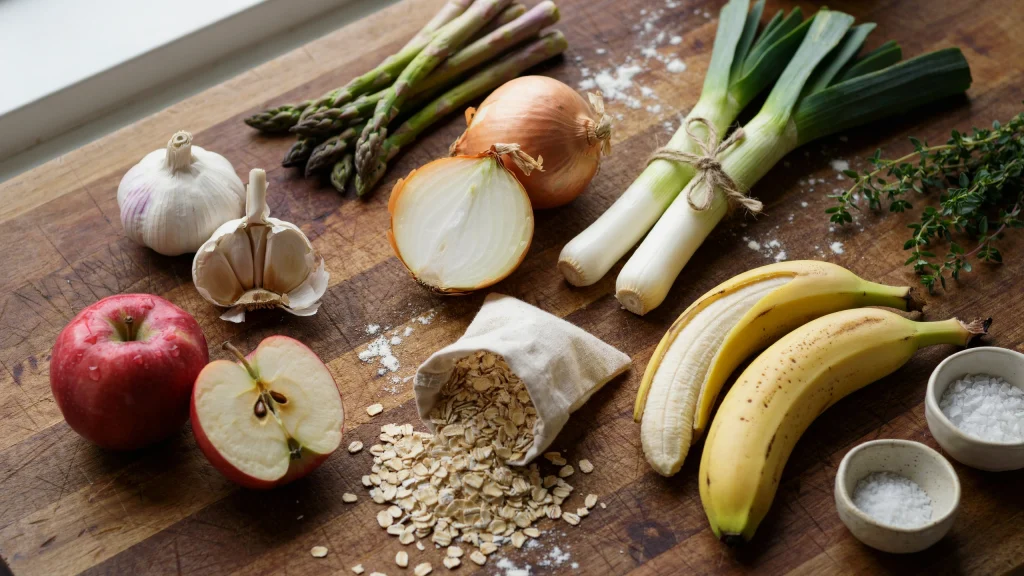
Some plants are especially rich in prebiotic fibers that feed beneficial bacteria. Prioritize these:
- Garlic — contains inulin and FOS
- Onions — rich in inulin
- Leeks — good source of inulin
- Asparagus — high in inulin
- Jerusalem artichokes — one of the richest sources of inulin
- Bananas (slightly green) — resistant starch
- Oats — beta-glucan
- Apples — pectin
- Flaxseeds — soluble fiber and lignans
- Chicory root — inulin
For a deeper dive into prebiotic foods, see our 7-Day Prebiotic Meal Plan.
Common Mistakes to Avoid with 30 Plants Per Week Gut Health
- Increasing fiber too fast: This causes bloating and gas. Add new plants gradually over weeks.
- Eating the same 10 plants every week: Variety is key. Rotate your choices.
- Relying only on supplements: Fiber supplements can help, but whole plants are superior.
- Ignoring herbs and spices: They count and add flavor without calories.
- Forgetting fermented foods: They add probiotics and count as plants.
7-Day Plan: Add 5 New Plants Per Day
| Day | New Plants to Add |
|---|---|
| 1 | Cilantro, chia seeds, kiwi, leek, turmeric |
| 2 | Parsley, flaxseeds, pomegranate, asparagus, ginger |
| 3 | Basil, pumpkin seeds, mango, artichoke, cinnamon |
| 4 | Mint, sunflower seeds, blackberries, Brussels sprouts, cumin |
| 5 | Dill, sesame seeds, papaya, cauliflower, oregano |
| 6 | Rosemary, hemp seeds, raspberries, bok choy, paprika |
| 7 | Thyme, poppy seeds, cherries, fennel, cardamom |
By the end of the week, you’ll have added 35 new plants — and you’ll be well on your way to 30+ per week. This is the simplest way to practice 30 plants per week gut health.
FAQ: Your 30 Plants Questions Answered
Do herbs and spices really count for 30 plants per week gut health?
Yes. They contain fiber and polyphenols, and they feed gut bacteria. A teaspoon of dried oregano or a handful of fresh basil counts.
What about coffee and dark chocolate?
Both come from plants and contain polyphenols. Coffee (plain, no sugar) and dark chocolate (70%+ cocoa) can count, but don’t overdo it.
Can I reach 30 plants if I’m on a keto or low-carb diet?
Yes. Focus on low-carb vegetables, herbs, nuts, seeds, and berries. You may not hit 30, but aim for as much variety as possible. See our Keto Diet for Beginners recipes.
Do frozen and canned plants count?
Yes. Frozen vegetables and fruits are picked and frozen at peak ripeness, retaining nutrients. Canned beans and vegetables count too (choose low-sodium).
How long does it take to see results?
Microbiome changes can be measured within days. For lasting improvement, aim for 30+ plants per week for at least 4 weeks.
Is 30 plants per week enough, or should I aim higher?
30 is a minimum. More diversity is better. Some researchers suggest aiming for 40 or more.
What if I have IBS or a sensitive gut?
Start slowly. Some high-fiber plants can trigger symptoms. Work with a dietitian. See our Gut-Health Recipes for gentle options.
Do I need to eat 30 different plants every week, or can I repeat?
The goal is 30 different plants per week. You can repeat them in different weeks, but within a week, aim for variety.
What is the easiest way to start 30 plants per week gut health?
Start by adding one new plant to each meal. Herbs and seeds are the easiest. Then build up to 5 new plants per day.
The One Thing to Do Today
Add 5 new plants to your diet this week.
Use the 7-day plan above. Check them off as you go. By next week, you’ll have a more diverse gut — and you’ll feel the difference. This is the essence of 30 plants per week gut health.
Enjoyed This Article?
Follow us on Facebook and Instagram for more science-backed gut health tips, recipes, and wellness strategies.
👉 Follow us on Facebook
👉 Follow us on Instagram
References for 30 Plants Per Week Gut Health
- King’s College London & ZOE. (2026). Eating a diverse range of plants everyday results in more favorable changes to microbiome than a probiotic.
- American Gut Project. (2018). American Gut: an Open Platform for Citizen Science Microbiome Research. mSystems.
- Mayo Clinic. (2025). Get to know your microbiome: It can improve gut health and more.
- Journal of Nutrition. (2026). Exercise and the Gut Microbiome: From Mechanisms to Clinical Applications.
- Nature Communications. (2026). The interplay of sleep characteristics with health factors and gut microbiome.
Disclaimer: This article is for informational purposes only and does not replace professional medical advice. Consult your doctor or a gastroenterologist if you have persistent digestive symptoms.