
Key Takeaways
- How to improve gut health naturally: The most effective approach combines dietary diversity (30+ plants/week), fermented foods, sleep optimization, exercise, and stress management.
- The #1 mistake: Trying to “fix” your gut with a detox or colon cleanse. These have no scientific support and can harm your microbiome.
- The fastest result: Add 5 new plants to your diet this week. Measurable microbiome changes occur within days.
- The 5 Pillars: Plant Diversity, Fermented Foods, Sleep, Exercise, Stress Management. For more on stress, see our Hormone & Wellness section.
Introduction: Why Your Gut Controls Almost Everything
How to improve gut health naturally starts with understanding one truth: your gut is not just a digestive tube. It is a 100-trillion-cell ecosystem that communicates with your brain, your immune system, and every organ in your body.
When your gut is imbalanced — a state called dysbiosis — you experience bloating, fatigue, brain fog, weakened immunity, mood swings, and poor sleep. For natural recipe ideas to support your gut, explore our Healthy Recipes.
The good news: your microbiome is modifiable. Unlike your genetics, you can change its composition in days to weeks. This guide will show you exactly how — no fads, no detoxes, and no expensive supplements you don’t need.
Part 1: What Is the Gut Microbiome?
The Science in Simple Terms
Your gut microbiome is a community of bacteria, viruses, fungi, and their genes living in your digestive tract. These microbes perform essential jobs:
- Break down fiber and starches your body cannot digest
- Synthesize vitamins (B vitamins, vitamin K)
- Produce short-chain fatty acids (SCFAs) that prevent disease
- Maintain the intestinal barrier — your protective gut lining
- Train your immune system to distinguish friend from foe
When you eat an apple, your stomach and small intestine break down some of it. The rest reaches your colon, where bacteria do the rest of the work — producing substances that are good for the cells of your colon and your entire body.
What Happens When Your Gut Is Out of Balance
An imbalanced microbiome is linked to IBS, IBD, obesity, anxiety, depression, autoimmune conditions, eczema, and more. According to a 2026 study in Nature Communications, lower gut microbial diversity is associated with poorer sleep quality and greater social jet lag.
But dysbiosis is linked to much more than infections:
- IBS and IBD (irritable bowel syndrome, Crohn’s, ulcerative colitis)
- Obesity and metabolic syndrome
- Anxiety and depression (via the gut-brain axis)
- Autoimmune conditions
- Eczema and skin disorders
Part 2: The 5 Pillars of Gut Health
Pillar 1: Plant Diversity (The Foundation)
The rule: Eat 30 different plants per week.
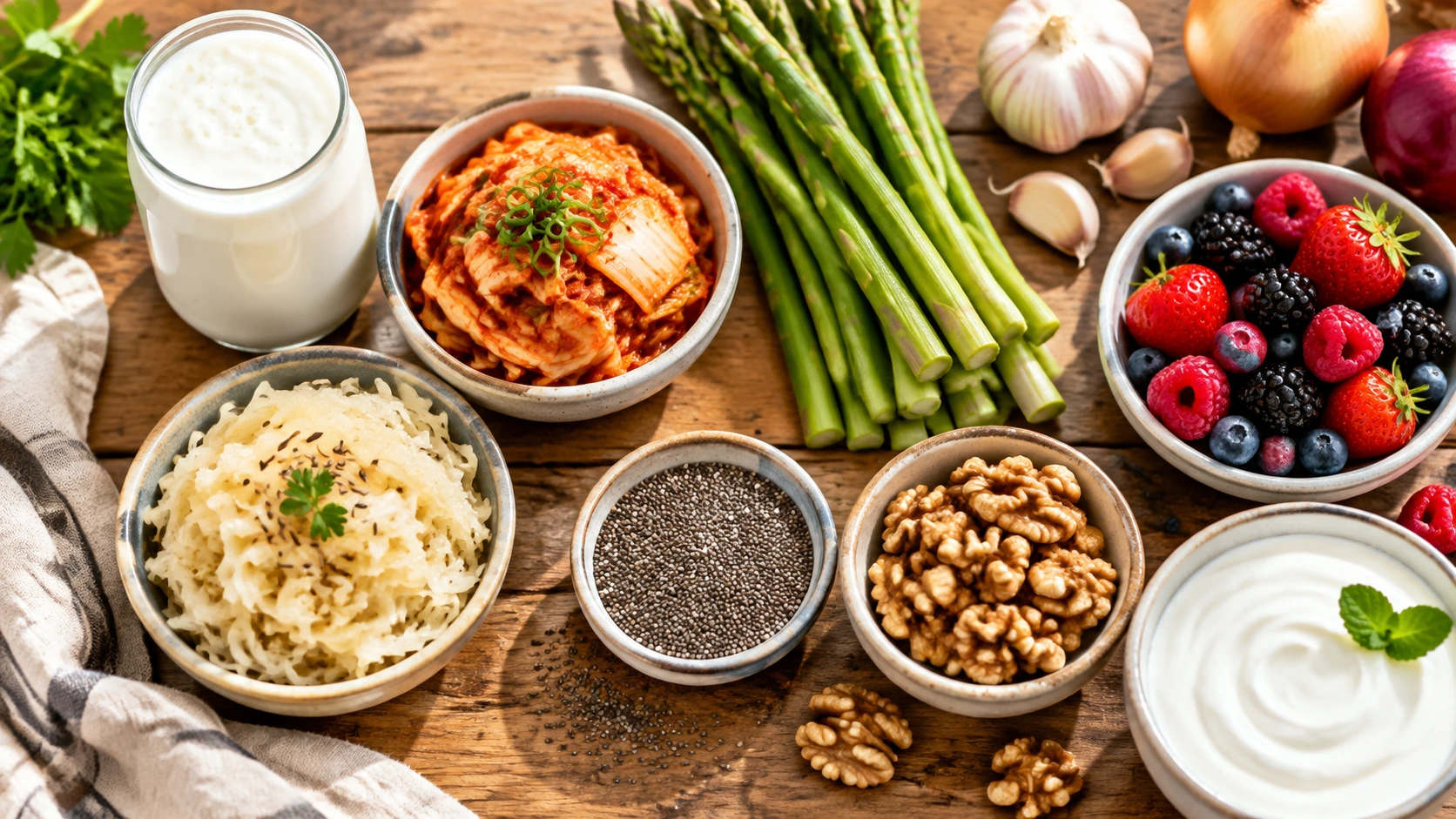
This includes vegetables, fruits, legumes, whole grains, nuts, seeds, herbs, and spices. Each plant feeds different beneficial bacteria.
Why it works: A landmark study from King’s College London and ZOE compared a 30-plants-per-week diet with a probiotic supplement. The results showed significant increases in favorable gut bacteria only in the plants group — not the probiotic group. The American Gut Project also concluded that people who ate 30 or more plants had more diverse gut microbiomes.
Best prebiotic foods:
| Category | Examples |
|---|---|
| Vegetables | Garlic, onions, leeks, asparagus, artichokes, dandelion greens |
| Fruits | Raspberries, blackberries, apples (with skin), bananas (less ripe), kiwis |
| Legumes | Lentils, chickpeas, black beans |
| Whole Grains | Oats, barley, quinoa, brown rice |
| Nuts & Seeds | Chia, flaxseeds, almonds, walnuts |
| Fermented Vegetables | Sauerkraut, kimchi |
Pro tip: Asparagus contains inulin, a prebiotic fiber that feeds healthy bacteria like bifidobacteria and lactobacilli. Try eating it raw for maximum effect.
Pillar 2: Fermented Foods (The Probiotic Boost)
Fermented foods contain live microorganisms that directly enrich your microbiome.
Best sources:
- Kefir — A fermented drink with more diverse probiotics than yogurt
- Kimchi and Sauerkraut — Fermented vegetables rich in Lactobacillus. Look for fresh (unpasteurized) sauerkraut; pasteurized versions have fewer live cultures.
- Tempeh and Natto — Fermented protein sources
- Miso — Fermented soybean paste
- Kombucha — Fermented tea (consume in moderation)
Probiotics vs. Prebiotics:
Think of it this way: Probiotics are the living bacteria. Prebiotics are the food that feeds them.
You need both. If you eat fermented foods but no fiber, the probiotics starve. If you eat fiber but no fermented foods, you have food but no workers. For recipe ideas that combine both, see our Gut-Health Focused recipes.
Pillar 3: Sleep and Circadian Rhythm
Your gut and your sleep have a bidirectional relationship. Poor sleep damages your microbiome, and an imbalanced microbiome disrupts your sleep.
What the science shows:
- Sleep deprivation alters microbiome composition and function
- 13 microbial taxa have been genetically linked to insomnia risk
- The bacterium Faecalibacterium prausnitzii produces a metabolite that reduces insomnia by inhibiting the cortisol axis
Sleep protocol:
- Aim for 7–9 hours of uninterrupted sleep
- Go to bed and wake up at the same time every day
- Avoid heavy meals within 3 hours of bedtime
- Limit screens 1 hour before bed
For more sleep optimization strategies, visit our Sleep Optimization section.
Pillar 4: Physical Exercise
Exercise improves your microbiome through increased intestinal motility, reduced stress, and immune modulation.
What the science shows:
- Moderate aerobic exercise is linked to increased microbial diversity and higher levels of butyrate-producing bacteria
- To see measurable results: 30–90 minutes of moderate-to-high intensity exercise, 3+ times per week, for 8 weeks
Caution: Very intense exercise can temporarily increase intestinal permeability. Balance is key.
Recommendation: 150 minutes of moderate activity per week (brisk walking, cycling, swimming) + 2 strength training sessions.
Pillar 5: Stress Management
Chronic stress destroys your microbiome. It increases cortisol, reduces microbial diversity, and compromises your intestinal barrier.
The shocking study: A 2026 study presented at Digestive Disease Week found that people with high stress levels AND who ate late at night had 2.5 times the risk of gut problems.
Anti-stress protocol:
- Deep breathing — 5 minutes, 3 times daily
- Meditation — 10 minutes daily
- Journaling — 5 minutes in the evening
- Time outdoors — 20 minutes minimum
- Limit alcohol — It directly disrupts the microbiome
- Mindful eating — Eat slowly, without screens
For more support, see our Stress & Adrenal Support resources.
Part 3: What Doesn’t Work (Stop Wasting Money)
❌ Detoxes and Colon Cleanses
Verdict: No scientific evidence. Colonics can disrupt your microbiome and cause harm. As Mayo Clinic explains, “detox teas are essentially laxatives — you’re not clearing toxins, you’re clearing normal stool.
❌ Probiotics as a Standalone Solution
Verdict: Probiotics are not a panacea. As one researcher put it, taking a generic probiotic is like “throwing 10,000 trees of a single species into the Amazon rainforest and hoping to solve all its problems.”
❌ IgG Food Sensitivity Tests
Verdict: Not scientifically validated for determining which foods inflame your gut.
❌ Increasing Fiber Too Quickly
Verdict: A sudden fiber increase causes bloating and gas. Gradual progression is essential — Mayo Clinic explicitly warns that adding many new prebiotic and probiotic foods at once may produce gas and discomfort.
Part 4: The 7-Day Gut Reset Protocol (No Detox)
Day 1–2: The Cleanup
- Remove: Artificial sweeteners, ultra-processed foods, alcohol
- Add: 1 fermented food per day (kefir at breakfast, kimchi at lunch)
- Hydrate: 8 glasses of water, including 1 green tea
Day 3–4: The Diversity
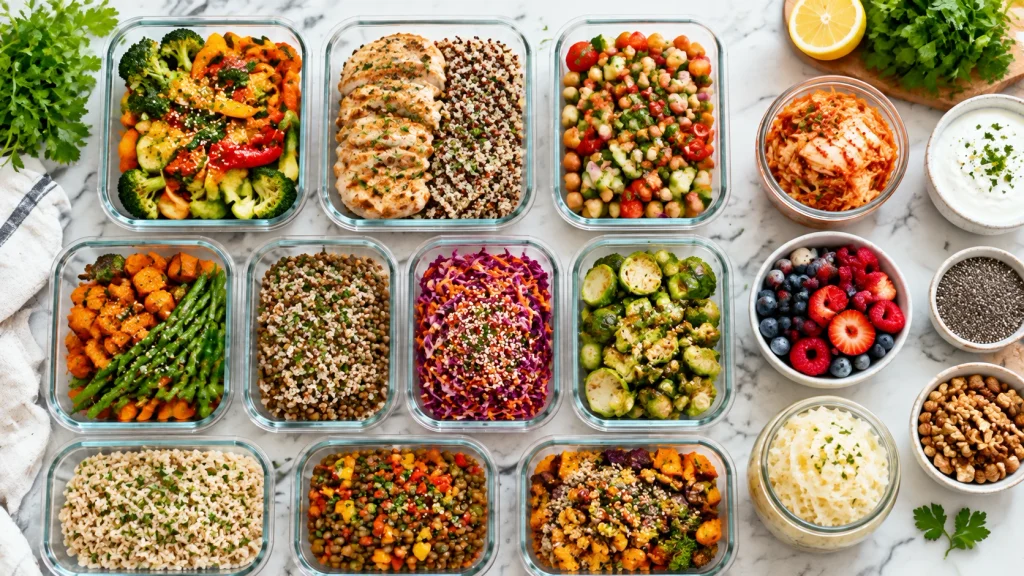
- Add: 5 new plants per day (herbs, seeds, different vegetables)
- Sample day:
- Breakfast: Oatmeal + chia seeds + berries + kefir
- Lunch: Lentil salad + spinach + tomatoes + avocado + sunflower seeds
- Dinner: Salmon + sweet potato + broccoli + roasted cauliflower
Day 5–6: The Consolidation
- Meal regularity: Breakfast, lunch, dinner at fixed times
- Movement: 30-minute walk after each meal
- Sleep: Bed before 11 PM, 7–9 hours
- Stress: 10 minutes of meditation
Day 7: Integration
- Evaluate: How do you feel? (digestion, energy, mood, sleep)
- Plan: Which changes will you maintain?
- Goal: 30 plants/week, 3 fermented foods/week, 150 minutes exercise
Part 5: Supplement Guide (What Actually Helps)
| Supplement | Evidence Level | Dose | Key Benefit |
|---|---|---|---|
| Psyllium Husk | ⭐⭐⭐⭐⭐ Strong | 10 g/day with water | Best-studied fiber for IBS, improves constipation and transit time |
| Lactobacillus rhamnosus GG | ⭐⭐⭐⭐ Strong | 10–20 billion CFU/day | 300+ clinical trials, supports digestion and immunity |
| Bifidobacterium longum 35624 | ⭐⭐⭐⭐ Strong | 1–10 billion CFU/day | Clinically studied for IBS symptom relief |
| Magnesium Glycinate | ⭐⭐⭐ Moderate | 200–400 mg before bed | Improves sleep quality (91% of participants in a 28-day study) |
What to Skip
- Greens powders — Expensive and less effective than whole vegetables
- Generic broad-spectrum probiotics — Quality of evidence matters more than number of strains
For a deeper dive into supplements, visit our Supplement Guides section.
FAQ: Your Gut Health Questions Answered
How long does it take to improve your gut health?
First changes are measurable within days. More significant results appear in 2–4 weeks. Full restoration: 8–12 weeks.
Are probiotics necessary?
Not for everyone. If you eat diverse fibers and fermented foods, you’re already supporting your microbiome.
Can I cure a “leaky gut”?
“Leaky gut syndrome” is not a recognized medical diagnosis. A fiber-rich diet and healthy lifestyle support barrier integrity.
Is gluten bad for my gut?
For people with celiac disease or non-celiac gluten sensitivity, yes. For most people, whole grains contain beneficial fibers.
Do artificial sweeteners affect the microbiome?
Research suggests some can disrupt microbial balance. Aspartame and saccharin are the most studied. Limit them.
What is the single best food for gut health?
There is no single “best” food. Diversity is the goal. Aim for 30 different plants per week.
Can stress cause gut problems?
Absolutely. The gut-brain axis means stress directly impacts digestion.
How do I know if my gut is unhealthy?
Common signs: bloating, gas, constipation, diarrhea, fatigue, brain fog, frequent illness, skin issues, and mood swings.
Do I need to take a probiotic every day?
Not necessarily. If you eat fermented foods regularly, you may not need a supplement.
Is coffee good or bad for gut health?
Moderate coffee consumption (1–2 cups/day) may actually support gut health.
What about apple cider vinegar?
Some evidence suggests it may help with digestion, but research is limited.
How does alcohol affect gut health?
Alcohol directly disrupts the microbiome and promotes inflammation. Limiting it is one of the best things you can do.
The One Thing to Do Today
Add 5 new plants to your diet this week.
This could be a new herb (cilantro, basil, parsley), a seed (chia, flax, sunflower), a vegetable (asparagus, artichoke, leek), or a fruit (kiwi, raspberry, blackberry). Each plant feeds different bacteria. Diversity is your best ally.
References
- King’s College London & ZOE. (2026). Eating a diverse range of plants everyday results in more favorable changes to microbiome than a probiotic. EurekAlert.
- Journal of Nutrition. (2026). Exercise and the Gut Microbiome: From Mechanisms to Clinical Applications.
- Digestive Disease Week. (2026). Chronic Stress and Late-Night Eating Deliver Double Hit on the Gut.
- American Gut Project. (2018). American Gut: an Open Platform for Citizen Science Microbiome Research. mSystems.
- Mayo Clinic. (2025). Get to know your microbiome: It can improve gut health and more.
- Thorne. (2026). Consumer-Reported Outcomes Following 28 Days of Magnesium Glycinate Supplementation.
Disclaimer: This article is for informational purposes only and does not replace professional medical advice. Consult your doctor or a gastroenterologist if you have persistent digestive symptoms, severe pain, blood in your stool, unexplained weight loss, or symptoms that interfere with your quality of life.