

Menopause libido challenges are incredibly common, affecting up to 55% of women, but understanding why it happens is the first step toward feeling confident and connected again. If hot flashes, vaginal dryness, or low energy have impacted your intimacy, you’re not alone—this transition affects both body and mind.
Important disclaimer: We are not medical professionals. This article shares research-based information to help you understand menopause libido challenges clearly so you can have informed conversations with your doctor. Always consult your healthcare provider before making changes to your health routine.
Menopause is more than temperature changes; it’s a hormonal shift that influences sex drive during menopause, comfort, and connection. Learning how these changes work makes it easier to choose the right support and rebuild sexual wellness effectively.
What Causes Low Libido During Menopause?
Menopause libido decline stems from declining estrogen and testosterone levels, which affect vaginal lubrication, arousal, and overall desire. Instead of the body responding quickly to sexual cues, nerve sensitivity decreases and blood flow to the pelvic area slows.
Because hormonal changes impact both physical comfort and emotional connection, effective menopause sex drive care combines medical support, daily habits, and relationship nurturing that help restore natural desire.
Menopause Libido Management Strategies
Low libido menopause recovery depends on symptom severity, relationship dynamics, and overall health. For many women, a combination of vaginal moisturizers, hormone therapy discussions, and lifestyle adjustments forms the foundation of feeling sexual again.
Talk to your doctor first. These suggestions come from research, not medical prescriptions. Your healthcare provider can help determine what approaches are safe and appropriate for your specific health needs.
In many cases, addressing both physical discomfort and emotional barriers works best. Simple daily habits that support pelvic health and reduce stress can make menopause intimacy feel natural again.
Understanding Menopause Libido Triggers
Common sex drive during menopause challenges include vaginal dryness, painful intercourse, fatigue from night sweats, and mood changes. Relationship stress, body image concerns, and lack of sleep further reduce desire.
If stress is affecting your connection, chronic stress and adrenal health offers practical insights for supporting emotional intimacy.
Effective Menopause Libido Treatments
Menopause libido restoration usually starts with vaginal health. Non-hormonal moisturizers, hyaluronic acid gels, and low-dose estrogen creams help restore comfort and natural lubrication.
Discuss with your healthcare provider. These products vary in safety and effectiveness depending on your medical history. Your doctor can recommend the best options for low libido menopause.
Always choose pH-balanced, fragrance-free products designed for low libido menopause, as harsh ingredients can worsen sensitivity and reduce desire further.
A gentle approach often works better than aggressive solutions. The goal is pelvic comfort, natural arousal, and confidence in intimacy.
Lifestyle Tips to Boost Menopause Libido
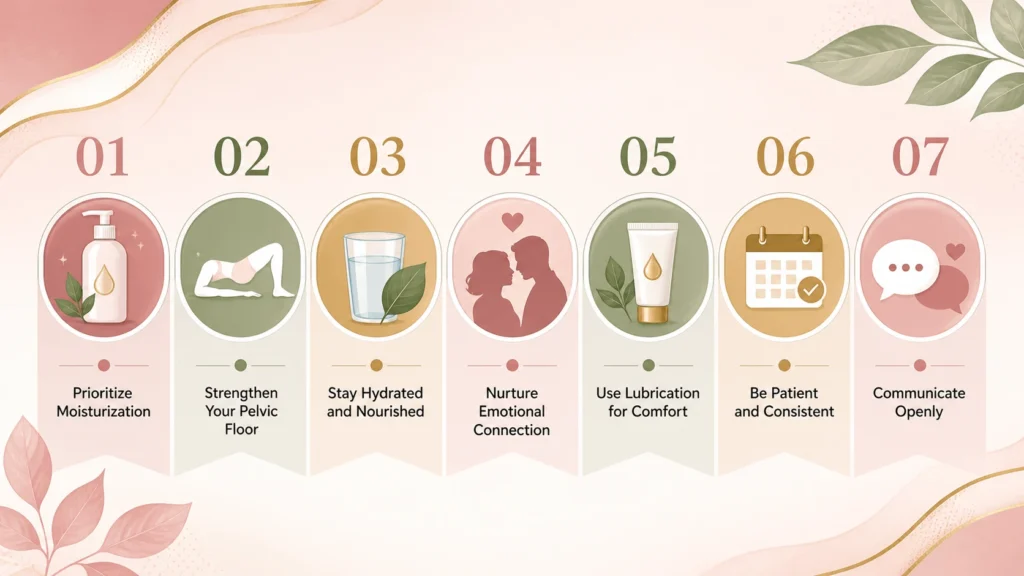
Your daily wellness routine matters as much as medical care. Here are seven menopause sex drive habits that support sexual wellness:
These lifestyle suggestions are research-based, not medical advice. Always consult your doctor before starting new routines, especially if you have health conditions or take medications.
Small consistent changes may not instantly restore desire, but they create the foundation for natural menopause libido over time.
- Use vaginal moisturizers daily, not just before intimacy
- Practice pelvic floor exercises (Kegels) 3x daily
- Stay hydrated and limit alcohol before bed
- Try extended foreplay focusing on non-genital touch
- Use lubricant generously during intimacy
- Schedule intimacy when energy is highest (often mornings)
- Communicate openly about comfort and desire
Strengthen Your Pelvic Floor: Pelvic floor exercises improve blood flow to the genital area and enhance sexual responsiveness during menopause. Try contracting your pelvic floor muscles for 5-10 seconds, 10 times daily. This simple habit supports natural arousal and comfort during intimacy. Check with your doctor to ensure proper technique.
Natural Support Options: Some women find relief with herbs like maca root, ginseng, or black cohosh, which may support energy and hormonal balance for low libido menopause. These supplements can interact with medications. Always consult your healthcare provider before trying herbal remedies.
If inflammation contributes to discomfort, explore how to reduce inflammation through diet.
Regular movement, quality sleep, and stress reduction also support menopause sex drive balance.
When to Seek Menopause Libido Help
If vaginal moisturizers and lifestyle changes don’t improve menopause libido, or if low desire affects your relationship or confidence, consult a menopause specialist. Persistent pain, severe dryness, or emotional distress may require hormone therapy evaluation.
Your doctor is your best resource. They can assess whether hormone therapy, specialized treatments, or counseling would be appropriate for your sex drive during menopause symptoms.
When sex drive during menopause symptoms persist, localized estrogen therapy, ospemifene, or laser treatments may be appropriate. In 2026, new options continue to expand for women who need more than basic care.
If sleep disruption reduces intimacy, sleep optimization can create the energy needed for connection.
FAQ: Menopause Libido Questions
Is low libido during menopause permanent
No, most women see menopause libido improvement with the right combination of physical comfort, hormonal support, and relationship nurturing. Discuss options with your doctor.
Does hormone therapy restore sex drive?
Hormone therapy often improves lubrication and comfort during low libido menopause, which indirectly boosts desire, though results vary by individual. Only use under medical supervision.
Can vaginal dryness be reversed?
Yes, daily moisturizers, localized estrogen, and lifestyle changes can restore natural lubrication and menopause sex drive comfort. Your doctor can recommend the safest products.
Final Thoughts on Menopause Libido
Talk Openly: Low libido menopause affects both partners. Honest conversations about comfort, desire, and expectations rebuild connection and reduce pressure. Many couples find menopause intimacy improves when they approach this transition as a team.
We research so you can speak confidently with your doctor. This article provides clear information about menopause libido challenges and solutions, but we’re not medical professionals. Your healthcare provider knows your health history and can create the best plan for you.
The most effective menopause libido plan is usually the one you can follow consistently, because long-term sexual wellness depends on small habits practiced every day.
Ready to feel confident in your intimacy again? Start by talking to your doctor about these research-backed approaches.
If you found this menopause libido guide helpful, please share it with someone who may benefit from it. Subscribe to our newsletter for more hormone wellness tips, or follow us on Instagram and Facebook for daily inspiration.