
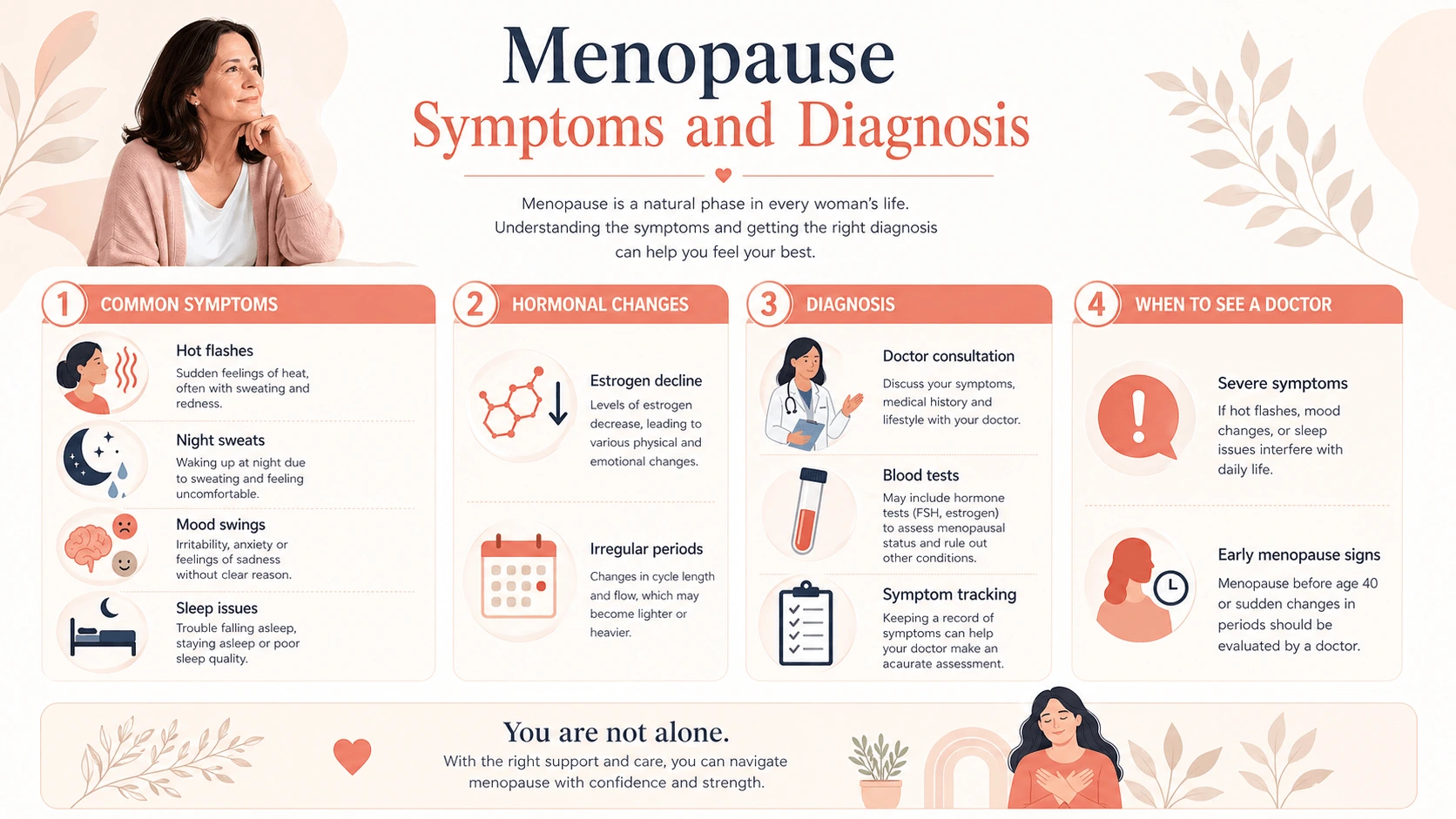
Menopause symptoms and diagnosis can feel overwhelming, but understanding the signs is the first step toward managing this natural transition with confidence. If you are noticing changes in your cycle, body temperature, or sleep, you may be approaching or entering this new life stage.
Menopause symptoms and diagnosis
Navigating your health during your 40s and 50s requires a clear understanding of menopause symptoms and diagnosis so you can seek the right support early.
Understanding menopause symptoms and diagnosis
Recognizing the key signs is essential for early support. Menopause symptoms and diagnosis often go hand in hand, as doctors frequently diagnose the transition based on the patterns of your symptoms rather than complex medical testing alone. For a complete look at clinical approaches, visit Healthline’s guide to menopause, which offers expert insights into diagnostic benchmarks.
Common symptoms of menopause
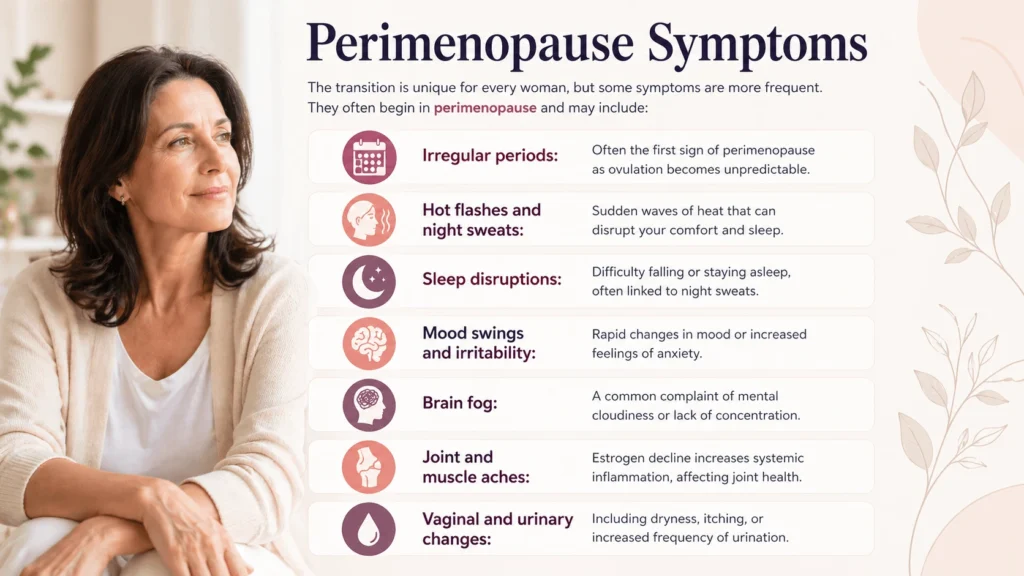
The transition is unique for every woman, but some symptoms are more frequent. They often begin in perimenopause and may include:
- Irregular periods: Often the first sign of perimenopause as ovulation becomes unpredictable.
- Hot flashes and night sweats: Sudden waves of heat that can disrupt your comfort and sleep.
- Sleep disruptions: Difficulty falling or staying asleep, often linked to night sweats.
- Mood swings and irritability: Rapid changes in mood or increased feelings of anxiety.
- Brain fog: A common complaint of mental cloudiness or lack of concentration.
- Joint and muscle aches: Estrogen decline increases systemic inflammation, affecting joint health.
- Vaginal and urinary changes: Including dryness, itching, or increased frequency of urination.
While many associate menopause with only hot flashes, the transition involves a complex shift in estrogen production. Research suggests that over 50% of perimenopausal women experience joint and muscle aches, as estrogen plays a key role in reducing systemic inflammation. Additionally, many women report “brain fog”—a feeling of mental cloudiness or difficulty concentrating—alongside mood swings and heart palpitations. Keeping a journal of these changes can be incredibly helpful for your menopause symptoms and diagnosis journey, providing your doctor with a clear picture of your experience.
If your cycle has been irregular, it is helpful to look into women’s hormonal balance to support your body naturally.
How menopause is diagnosed
Technically, menopause is diagnosed after you have gone 12 consecutive months without a menstrual period. This “12-month rule” is the clinical standard defining the transition, assuming no other medical cause. During perimenopause, your hormone levels, specifically estrogen and progesterone, fluctuate significantly, leading to the symptoms mentioned above.
To manage these fluctuations, consider incorporating holistic wellness habits to reduce overall strain on your body.
If you have questions about your cycle, do not hesitate to ask your doctor how the specific timeline of your menopause symptoms and diagnosis can be mapped out to create a care plan.
Tests that may help confirm menopause
It is a common misconception that every woman requires intensive lab testing to identify this transition. If you are over the age of 45, most healthcare providers will focus on the clinical history rather than blood tests. Because hormone levels like FSH fluctuate drastically from day to day, a single blood test is rarely a reliable indicator. Instead, your doctor may use lab work to rule out other issues, such as:
- Thyroid dysfunction: Which can mimic hormonal shifts.
- Anemia or Vitamin deficiencies: Which impact energy and mood.
- Pregnancy tests: To confirm symptoms are not pregnancy-related.
For those struggling with rest during this time, our guide on sleep optimization provides actionable tips.
Perimenopause vs. menopause
Perimenopause is the “bridge” phase where symptoms often peak. Many women wonder if they are already in menopause when they are actually in perimenopause. Understanding the difference is vital for your health plan. If you feel stressed by these changes, stress and adrenal support can be a game-changer.
Because perimenopause often lasts several years, documenting your menopause symptoms and diagnosis patterns can help differentiate between natural hormonal shifts and other underlying conditions.
Empowering your journey
Understanding the link between your menopause symptoms and diagnosis is not just about medical labels; it is about reclaiming your vitality. By working closely with your healthcare provider to confirm your stage, you can move away from uncertainty and begin focusing on personalized treatment plans. Whether you choose lifestyle adjustments, hormone therapy, or integrative support, having a clear understanding empowers you to make informed decisions that protect your long-term heart and bone health.
Pair your medical visits with wellness and self-care to keep your mental health a priority.
FAQ
Why don’t I need a blood test to diagnose menopause?
For women over 45, diagnosis is primarily clinical. Blood tests for FSH or Estradiol are often unreliable because hormone levels fluctuate daily during perimenopause.
What is the “12-month rule” in menopause?
It’s the clinical standard defining menopause: you are officially menopausal only after 12 consecutive months without a menstrual period.
Can I get pregnant in perimenopause?
Yes, you can still get pregnant until you have officially hit menopause, so birth control is still important if you wish to avoid pregnancy.
Take Control of Your Wellness
We know that the perimenopause transition can raise so many questions. Have you found a routine that helps you manage your symptoms, or are you looking for a place to share your experience? Join our community in our Facebook to connect with other women who are navigating this same life stage. Your story might be exactly what someone else needs to hear today.
Remember, this transition is a new chapter in your life, not an ending. If you want to explore how wholesome nutrition and mindful self-care rituals can help you feel like yourself again, check out our latest Hormone Wellness guides here. Take the time to listen to your body—you deserve to feel vibrant and empowered.
By keeping an open dialogue with your healthcare team about your menopause symptoms and diagnosis, you ensure that every part of your transition is supported, allowing you to focus on your long-term vitality.
- Follow us on Instagram for daily wellness inspiration.