
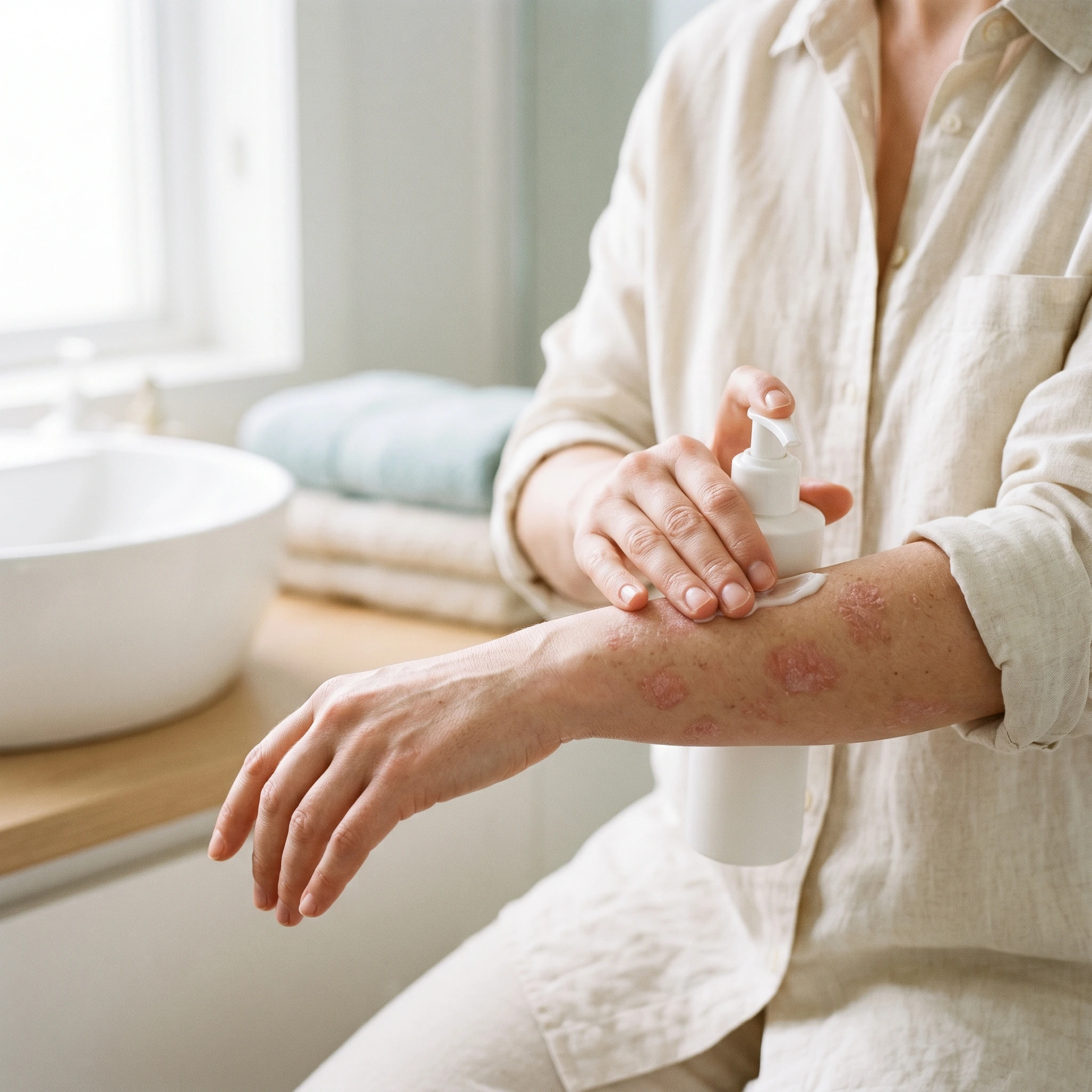
Psoriasis treatment and management can be challenging, but understanding the condition is the first step toward clearer, more comfortable skin. If you are dealing with red, scaly patches and constant itching, you are not alone—this is a condition that often requires long-term care and consistency.
Psoriasis is not only a skin issue; it is a long-term condition that often needs a thoughtful and consistent approach. Learning how it develops and what can trigger flare-ups makes it easier to choose the right care routine and manage symptoms more effectively.
What is psoriasis?
Psoriasis is a chronic, immune-mediated skin condition that causes skin cells to grow too quickly. Instead of renewing every few weeks, skin cells may build up in just a few days, which leads to thick, scaly plaques that can be itchy, dry, or painful.
Because psoriasis is linked to inflammation in the body, it is more than a surface skin problem. That is why effective care often combines medical treatment, daily skin care, and lifestyle habits that help reduce flare-ups.
Psoriasis is a chronic inflammatory condition that affects the skin and often requires ongoing management rather than a one-time treatment. Understanding the condition, identifying triggers, and choosing the right treatment plan can make symptoms more manageable and improve day-to-day comfort.
Psoriasis treatment and management
Psoriasis treatment depends on how severe the condition is, which areas of the body are affected, and how much it impacts daily life. For many people with mild to moderate symptoms, topical treatments such as creams and ointments are often the first step in managing flare-ups.
The foundation of effective psoriasis treatment and management involves a mix of topical care, lifestyle adjustments, and stress reduction. For clinical details and advanced options, you can consult Healthline’s expert guide to psoriasis.
Understanding psoriasis triggers
Flare-ups are often linked to environmental and emotional triggers. Common triggers include stress, skin injuries, infections such as strep throat, cold dry weather, and lifestyle factors like alcohol consumption and smoking.
If you feel stressed by this cycle, chronic stress and adrenal health is a helpful read that can support your understanding of internal inflammation and stress management.
Effective topical strategies
Topical care is usually the first line of defense in psoriasis treatment and management. Common options include corticosteroids to reduce inflammation, vitamin D analogs to help regulate skin cell growth, and salicylic acid to soften scales and improve medication penetration.
Always choose fragrance-free products and formulas labeled for sensitive skin, since added fragrance or harsh ingredients can worsen irritation and trigger flare-ups.
A gentle routine is often more effective than aggressive treatment. The goal is to calm the skin, protect the barrier, and make flare-ups less frequent over time.
Lifestyle tips for clearer skin
Your daily routine is just as important as your medication. Here are seven self-care habits that can help support calmer skin.
Small changes in your daily routine may not cure psoriasis, but they can make symptoms easier to live with and help your skin feel more comfortable.
- Hydrate deeply with a thick, fragrance-free cream right after bathing.
- Take lukewarm showers and keep them brief to avoid stripping natural oils.
- Pat the skin dry instead of rubbing it.
- Get brief, controlled sunlight only if your doctor says it is appropriate.
- Focus on anti-inflammatory nutrition to help reduce internal inflammation.
- Use a humidifier in dry indoor air, especially during winter.
- Track your triggers in a journal to identify what may lead to flare-ups.
If inflammation is a concern, check our guide on how to reduce inflammation through food.
Lifestyle habits can also support psoriasis management. Research suggests that maintaining a healthy weight, exercising regularly, limiting alcohol, and avoiding smoking may help reduce severity and improve overall skin health.
When to seek professional help
If your psoriasis does not improve with basic topical care, or if it starts to affect your sleep, confidence, or daily routine, it is time to speak with a healthcare professional. Psoriasis can sometimes require a step-up approach, especially when plaques become widespread, painful, or difficult to control.
When psoriasis is more persistent or widespread, phototherapy or prescription oral and injected medications may be needed. In 2026, treatment options continue to include biologics and other advanced therapies for people who do not respond well to topical care alone.
If your skin condition is affecting your sleep quality, sleep optimization can support recovery and comfort at night.
If you found this article useful, feel free to share it with friends or family who may find it helpful.
FAQ
Is psoriasis contagious?
No, psoriasis is an immune-mediated condition and cannot be spread from person to person.
Does diet impact psoriasis?
Diet does not cure psoriasis, but anti-inflammatory habits may help support overall management.
Can stress make psoriasis worse?
Yes, stress is one of the most common flare triggers.
Final thoughts
Taking care of psoriasis is often a long-term journey, but small daily habits and the right treatment plan can make a meaningful difference. With consistency, support, and the right information, it becomes easier to keep symptoms under control and improve overall comfort.
If you found this guide helpful, please share it with someone who may benefit from it. You can also subscribe to our newsletter for more science-backed wellness tips, or follow us on Instagram and Facebook for daily inspiration.