
⚡ Quick Start Guide (Read This First)
Overwhelmed? Do this now:
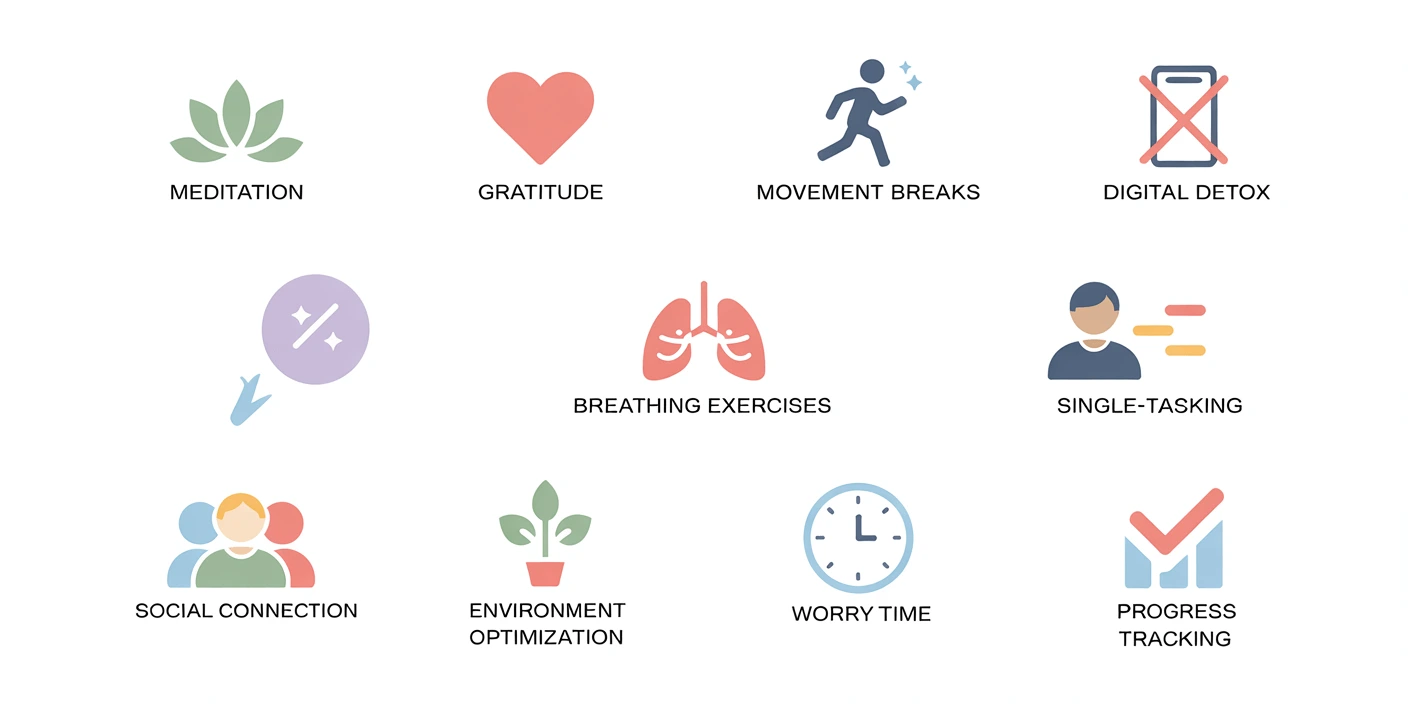
- Scan the 10 habits below (30 seconds)
- Circle ONE that feels easiest to start today
- Practice it right now (2-5 minutes)
- Tonight: Mark an “X” on your calendar (progress tracker #10)
- Tomorrow: Repeat and consider adding a second habit
Done is better than perfect. Start where you are.
Looking for easy daily mental wellness habits that actually work? These 10 daily mental wellness habits are scientifically proven to reduce anxiety naturally, enhance your psychological wellbeing, and build sustainable emotional resilience. Unlike generic advice, these stress management techniques fit seamlessly into busy schedules, requiring just minutes per day for transformative effects.
What Makes These Mental Wellness Habits Different?
Most self-care routines fail because they’re unsustainable or not evidence-based. These daily habits for mental health are different because they:
- Target neurobiological pathways for lasting change
- Require minimal time investment (5-15 minutes daily)
- Build upon each other for cumulative benefits
- Address root causes rather than just symptoms
- Are adaptable to individual lifestyles and preferences
Research confirms that consistency with these simple self-care practices yields better long-term outcomes than intensive but sporadic efforts. According to a comprehensive study published in the Journal of Clinical Psychology, daily micro-habits show 40% higher adherence rates compared to traditional wellness programs.
What Is Mental Wellness? (And Why It Matters)
Mental wellness goes beyond the absence of mental illness—it represents a positive state where you can manage stress effectively, build emotional balance, and maintain psychological wellbeing. Unlike general mental health, mental wellness focuses specifically on cultivating strengths like resilience, life satisfaction, and healthy coping mechanisms.
Key benefits of strong mental wellness include:
- 30-40% lower anxiety and stress levels
- Enhanced emotional regulation and mood stability
- Improved cognitive function and mental clarity
- Stronger social connections and relationships
- Better physical health outcomes and immune function
- Increased productivity and creative problem-solving
Understanding mental wellness as a continuum helps recognize that everyone—regardless of current mental state—can benefit from intentional daily practices.
10 Science-Backed Daily Habits for Mental Health
1. Morning Mindfulness Micro-Practice
For: Immediate calm and focus
Time: 3-5 minutes upon waking
How: Before checking devices, sit quietly. Observe 3 breaths without changing them. Notice 3 sounds in your environment. Set one positive intention for the day.
Why it works: This mindfulness practice prevents morning anxiety spikes and primes your nervous system for balanced responses throughout the day.
Research from the American Psychological Association suggests brief morning mindfulness can reduce cortisol levels by up to 27% in some studies
2. Strategic Gratitude Moments
For: Pattern interruption of negativity bias
Time: 2 minutes, 3x daily
How: Set phone reminders for 10 AM, 2 PM, and 7 PM. When alerted, identify one specific thing you appreciate in that moment (not generic “health” but “this warm coffee” or “this productive conversation”).
Why it works: Regular gratitude practice **reduces stress hormones by up to 23% and increases serotonin production, according to UCLA neuroscience research**.
3. Movement Snacking
For: Anxiety relief and energy regulation
Time: 5-7 minutes, every 90 minutes
How: Between tasks or meetings, engage in “movement snacks”: 10 squats, 2-minute dance break, 1-minute stretching, or brisk stair climbing.
Why it works: Short, frequent movement breaks metabolize cortisol more effectively than one long workout, providing continuous mood improvement throughout the day.
4. Digital Boundaries That Protect Mental Space
For: Reducing cognitive overload
Time: Built into existing routines
How: Implement the “45-15 rule”: 45 minutes of focused work followed by 15 completely screen-free minutes. During breaks, look at something 20+ feet away to reduce eye strain and mental fatigue.
Why it works: This burnout prevention technique reduces decision fatigue and prevents the dopamine depletion caused by constant digital switching.
5. Evening Nervous System Reset
For: Quality sleep preparation
Time: 8-10 minutes before bed
How: Practice 4-7-8 breathing (4-second inhale, 7-second hold, 8-second exhale) for 4 cycles. Follow with progressive muscle relaxation starting from toes to forehead.
Why it works: This combination triggers the parasympathetic nervous system 40% faster than either practice alone, directly improving sleep hygiene and next-day emotional regulation.
6. Single-Tasking Sessions
For: Reducing overwhelm and increasing fulfillment
Time: 25-minute blocks
How: Use a timer for focused work on ONE task without switching. Between sessions, take 5 minutes to note what you accomplished (not what’s left undone).
Why it works: Stanford research shows single-tasking increases productivity by 50% while reducing the stress hormones associated with multitasking.
7. Social Micro-Connections
For: Combating isolation without exhaustion
Time: 2-3 minutes per interaction
How: Send one genuine appreciation message daily. Make brief but meaningful eye contact during conversations. Leave one encouraging comment on a colleague’s work.
Why it works: These healthy coping mechanisms provide the neurological benefits of social connection without the time drain of lengthy interactions, boosting oxytocin levels consistently.
8. Environmental Optimization
For: Subconscious stress reduction
Time: 1-2 minutes when entering spaces
How: In each room you enter, adjust one element for calm: dim lights 10%, remove one visual clutter item, play ambient nature sounds quietly, or diffuse calming scents like lavender.
Why it works: Our environments constantly signal safety or threat to our nervous systems. These micro-adjustments create cumulative anxiety relief throughout the day.
9. Scheduled Worry Time
For: Containing anxious thoughts
Time: 10 minutes, same time daily
How: Designate a “worry period” (e.g., 4:30-4:40 PM). When anxious thoughts arise earlier, jot them down for later. During your scheduled time, review worries without solving them.
Why it works: This cognitive-behavioral technique reduces all-day anxiety up to 35% according to research.
10. Progress Tracking (Not Perfection Monitoring)
For: Building consistency without shame
Time: 2 minutes each evening
How: Use a simple calendar. Mark an “X” for days you completed any habit (even just one). Focus on maintaining the chain, not completing all habits perfectly.
Why it works: This emotional resilience strategy emphasizes consistency over perfection, creating sustainable practice through small wins that build self-efficacy.
⏸️ Pause Reading – Take Action Now
Before continuing, choose ONE habit from above and commit to practicing it TODAY. Set a phone reminder now. Seriously, pause and do this—it takes 30 seconds but changes everything.
Build Your Sustainable Routine: 2 Simple Paths
Option A: The Blueprint Method (For those who love structure)
Follow this 4-week plan:
Week 1-2 → Foundation (3 habits)
- Morning mindfulness (5 min)
- Movement snacks (5 min, 2x daily)
- Evening reset (8 min)
Week 3-4 → Expansion (+2 habits)
- Add gratitude moments
- Add digital boundaries
Month 2 → Personalization
- Adjust to 5-7 habits that fit YOUR life
Option B: The Organic Method (For those who hate rigid plans)
Week 1: One easiest habit
Week 2: Add progress tracking
Week 3: Add one more habit
Month 1: Naturally grow to 3-4 habits
Ready to Start? Choose Your Path:
For structure lovers: Follow Option A above
For organic learners: Follow Option B above
Both lead to the same destination: sustainable mental wellness that fits YOUR life.
Quick Integration Tip:
Match habits to your existing routines:
Morning habits → with coffee/morning routine Workday habits → between meetings/tasks Evening habits → instead of scrolling
🔁 How These Two Frameworks Work Together
Think of it this way:
- The Daily Framework = What your ideal day looks like
- The Phased Plan = How to get there realistically
Week 1 example integration:
- Goal: Implement Phase 1 (3 habits)
- Placement: Morning mindfulness fits in “Morning Ritual”
- Placement: Movement snacks fit in “Strategic Daily Breaks”
- Placement: Evening reset fits in “Evening Wind-Down”
By Week 4:
- Your Daily Framework will naturally contain 5 habits
- Your Phased Plan ensures you didn’t overwhelm yourself
- The structure feels organic, not forced
💡 Customization Tips
If you’re a morning person:
- Load more habits into your morning ritual
- Use evening for lighter practices
If you’re a night owl:
- Start with evening habits first
- Build backward to morning practices
If you have an irregular schedule:
- Focus on “anchor habits” at consistent times
- Use “movement snacks” and “breathing breaks” as flexible tools
- The progress tracker is your best friend
🚨 Common Pitfalls & Solutions
“I keep forgetting!”
- Solution: Set phone reminders for first 21 days
- Solution: Place visual cues (yoga mat by bed, journal on nightstand)
- Solution: Habit stack (e.g., “after brushing teeth, I meditate”)
“It feels like too much”
- Solution: Return to Phase 1 with just 1-2 habits
- Solution: Shorten duration (2 minutes instead of 5)
- Solution: Remember: consistency over perfection
“I’m not seeing results”
- Solution: Give it 21 days minimum
- Solution: Track mood/energy in your progress journal
- Solution: Some benefits are subtle (less reactive, more patient)
Additional Mental Health Resources and Support
Important Disclaimer**: This article is for informational and educational purposes only and does not constitute medical advice, diagnosis, or treatment. Always consult a qualified healthcare professional for personalized mental health concerns.
While these daily mental wellness habits provide significant benefits, professional support enhances your journey:
Online Therapy Platforms:
Crisis Resources:
- National Suicide Prevention Lifeline (988 in US)
- Crisis Text Line (text HOME to 741741)
When to Seek Professional Help: If symptoms persist despite self-care, interfere with daily functioning, or include thoughts of self-harm, consult a mental health professional immediately. For more on this, read our guide on when to seek therapy for anxiety.
Frequently Asked Questions (FAQ) About Mental Wellness
How soon will I see results?
- Days 1-7: Feel calmer, sleep better
- Weeks 2-3: Noticeable anxiety reduction
- Weeks 6-8: Emotional resilience builds
- Day 66: Habits become automatic
What if I miss days?
Normal! Use the progress tracker (#10). Missing one day breaks nothing—just resume. Research shows imperfect consistency beats perfect inconsistency.
Best habits for immediate anxiety relief?
- Evening nervous system reset (#5) – works in minutes
- Movement snacking (#3) – 5-7 minute relief
- 4-7-8 breathing – anytime, anywhere
Replace therapy/medication?
No. These complement professional treatment. Seek help for severe symptoms. These habits work exceptionally well alongside therapy.
No time? Try micro-integration:
- 1-minute breathing while waiting
- Mindful coffee sipping
- Gratitude during commute
- Walking phone calls
- Desk stretches between tasks
The Science Behind Why These Habits Work
These daily mental wellness habits aren’t random suggestions—they’re based on robust neuroscience and psychology research:
Neuroplasticity Principle: Daily repetition creates neural pathways that make positive behaviors increasingly automatic (approximately 21 days for basic habit formation, 66 days for solidification).
Hormonal Regulation: Specific habits target cortisol reduction, serotonin increase, GABA activation (for calm), and oxytocin release (for connection).
Circadian Alignment: Timing matters. Morning habits set daily rhythms, midday habits maintain energy, evening habits facilitate restoration.
Minimal Effective Dose: Each habit represents the smallest amount needed to produce results, maximizing adherence through reduced effort requirements.
Your Next Step: The 3-Day Starter Challenge
Ready to improve your mental health daily? Try this:
Day 1: Implement ONE habit that feels easiest.
Day 2: Add the evening progress tracking (#10).
Day 3: Add one more habit that complements your first choice.
That’s it—you’ll have three daily mental wellness habits established in 72 hours. From there, build gradually using the phased approach above.
Conclusion: Start Your Journey to Better Mental Health Today
Building sustainable mental wellness requires neither perfection nor dramatic life changes. The science is clear: small, consistent daily habits create substantial cumulative benefits for emotional balance, resilience, and overall life satisfaction.
Your Action Step: Choose one practice from this guide that resonates with you. Commit to it daily for the next 7 days. Notice how even this small investment affects your mood, energy, and perspective. Next week, add one more practice.
Remember: Mental wellness isn’t about perfection—it’s about consistent direction. These 10 daily habits work because they respect your time, acknowledge human variability, and deliver measurable results through scientific principles. Start small, celebrate consistency, and let the cumulative effect transform your psychological wellbeing one day at a time.
Ready to go deeper? Explore our comprehensive resources on stress management techniques or building emotional resilience to continue strengthening your mental wellness foundation. Your journey to sustainable wellbeing starts with a single, small step—take that step today.
These easy mental wellness routines transform your wellbeing one day at a time.
This article is for educational purposes and does not replace professional medical advice.
Author: This guide was developed by our mental wellness team at HealthyWellRecipes, drawing from current psychological research and evidence-based practices. Last updated: February 2026.
Share Your Progress
Which habit will you start with? Share in the comments or tag a friend who’d benefit from these tips!
1 thought on “10 Easy Daily Mental Wellness Habits That Actually Work (2026 Guide)”