
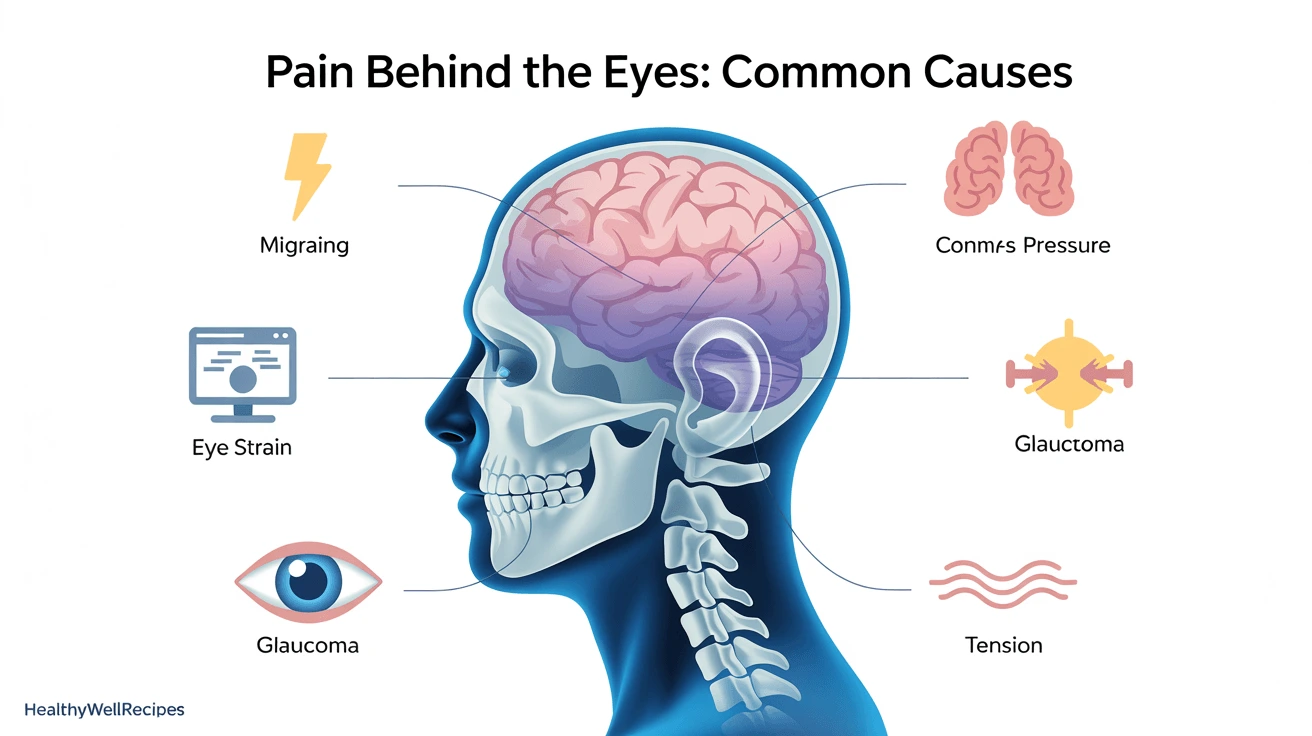
Pain behind the eyes can feel like a simple tension headache—or a warning sign of something more serious. In this guide, you’ll discover common causes of pain behind the eyes, practical at‑home treatments, and clear red‑flag symptoms that mean you should head to the emergency room immediately.
Pain behind the eyes can also be called a headache behind the eyes, pressure behind the eyes, or eye strain–related discomfort.
⚠️ If your pain behind the eyes comes on suddenly, is extremely severe, or is accompanied by blurred vision, fever, or vomiting, seek emergency care right away. Otherwise, keep reading to understand what might be causing your discomfort.
When Pain Behind the Eyes Becomes an Emergency
Outline bullets:
- Sudden, severe pain behind the eyes
- Vision changes (blurred, double, halos, blind spots)
- Fever + eye pain or headache
- Nausea or vomiting with throbbing pain
- Pain that rapidly worsens over hours
✅ If you notice even one of these red‑flag symptoms, don’t wait—call emergency services or go to the ER. It’s better to be safe than to risk vision loss or a serious neurological issue.
Common Causes of Pain Behind the Eyes
Migraine and Headache Behind the Eyes
- Pulsating, one‑sided pain
- Light sensitivity, nausea, visual aura (flashes, zigzags)
- Family history of migraine
Sinus Pressure and Pain Behind the Eyes
- Dull, constant pressure behind the eyes and forehead
- Nasal congestion, facial tenderness
- Often worse when bending forward
Eye Strain and Digital Overload
- Burning or aching eyes after screen time
- Dryness, blurred vision, squinting
- Often described as “headache behind the eyes” after long computer use
For screen-related eye strain, check Seema Eye Care.
Glaucoma and Serious Eye Conditions
- Intense eye pain, rainbow‑colored halos
- Sudden vision loss or cloudiness
- Nausea and headache (acute angle‑closure glaucoma)
Thyroid Eye Disease and Other Systemic Causes
- Bulging eyes, difficulty closing lids
- Aching feeling behind the eyes
- Often linked to hyperthyroidism (Graves’ disease)
For more on common causes, read Verywell Health.
📌 If you stare at screens all day and regularly feel pain behind the eyes, grab our free “Eye Strain Rescue Checklist” and implement a protective routine in just 7 days.
At‑Home Treatments and Relief
- Cold or warm compress (depending on cause)
- Hydration, reduce caffeine, manage stress
- Eye drops for dryness, 20‑20‑20 rule for screens
- Over‑the‑counter pain relievers (if no contraindications)
In addition to these steps, eating an anti‑inflammatory diet can help reduce the frequency of headaches behind the eyes and eye strain. Discover a simple, anti‑inflammatory recipe on HealthyWellRecipes.com that supports both brain and eye health.
When to See a Doctor (and Which One)
- See an ophthalmologist if:
- Vision changes, severe eye pain, history of glaucoma.
- See a GP / neurologist if:
- Frequent migraines, headaches behind the eyes, or neurological symptoms.
For emergency warning signs, see the Mayo Clinic.
If you’re unsure whether your pain behind the eyes is a migraine, sinus issue, or something urgent, use our free “Do I Need the ER?” symptom guide to decide safely in under 5 minutes. Then act fast if you see any red flags.
Frequently asked questions (FAQ)
What causes pain behind the eyes?
Pain behind the eyes is commonly triggered by migraines, sinus congestion, eye strain from screens, or eye conditions like glaucoma or thyroid eye disease. In some cases, it can also signal a more serious issue like increased pressure inside the skull or a neurological problem, so red‑flag symptoms should never be ignored.
Is pain behind the eyes always a migraine?
No. While migraine is a frequent cause of headaches behind the eyes, other common causes include sinus pressure, eye strain, and dry eyes. A doctor must rule out serious eye diseases such as acute glaucoma, especially if you notice vision changes, nausea, or sudden severe pain.
How can I relieve pain behind the eyes at home?
For mild cases, try resting in a dark room, using a cold or warm compress on the area behind the eyes, staying hydrated, and taking short breaks from screens using the 20‑20‑20 rule. Over‑the‑counter pain relievers can help some people, but they should not be used regularly without medical advice—especially if headaches behind the eyes are frequent or worsening.
When should I go to the ER for pain behind the eyes?
Seek emergency care immediately if your pain behind the eyes comes on suddenly, is extremely severe, or is accompanied by blurred or double vision, flashing lights, vomiting, fever, or neck stiffness. These symptoms can signal a stroke, acute glaucoma, meningitis, or another serious condition that must be treated right away.
Can screens really cause pain behind the eyes?
Yes. Long hours in front of computers, phones, or tablets can lead to eye strain and headaches behind the eyes, especially if you don’t blink often, work in poor lighting, or have uncorrected vision problems. Simple changes—like adjusting screen brightness, taking regular breaks, and using artificial tears for dryness—can significantly reduce this type of pain.
How do I know if my pain behind the eye is a sign of glaucoma?
Glaucoma‑related pain often feels like a deep, aching discomfort behind the eye, sometimes with halos around lights, blurred vision, or sudden vision loss. If you have a history of eye disease, high eye pressure, or are over 40 with frequent eye pain, an ophthalmologist should evaluate you promptly.
Can sinus problems cause pressure behind the eyes?
Yes. Sinus infections or congestion can create pressure behind the eyes and cheeks, especially during colds or seasonal allergies. This discomfort usually comes with a stuffy nose, facial tenderness, and sometimes a low‑grade fever. If sinus symptoms last more than 10 days or get worse, see a healthcare provider.
How often is pain behind the eyes “normal”?
Occasional headaches behind the eyes from stress, fatigue, or mild sinus pressure can be normal. However, if you experience frequent or worsening headaches behind the eyes, or they interfere with your daily life, you should consult a doctor to rule out chronic migraines, eye disease, or other underlying conditions.
Conclusion
Persistent pain behind the eyes can be caused by a wide range of issues—from simple eye strain to serious eye diseases or neurological problems. By understanding the common causes, recognizing warning signs, and taking practical steps at home, you can manage mild discomfort safely and decide when to seek medical help.
If your headache behind the eyes is new, severe, or accompanied by vision changes, vomiting, or fever, do not wait—go to the emergency room or call emergency services right away. For less urgent but recurring pain, tracking your symptoms with a journal or checklist and sharing it with your doctor can speed up diagnosis and improve your treatment plan.
📌 If you spend long hours in front of screens or suffer from frequent headaches behind the eyes, download our free “Eye Pain & Headache Relief Guide” to build a simple, sustainable routine that protects your vision and your quality of life.
For energy-supporting options, see Energy-Boosting Meals.
1 thought on “5 Shocking Causes of Pain Behind the Eyes (And What to Do)”