
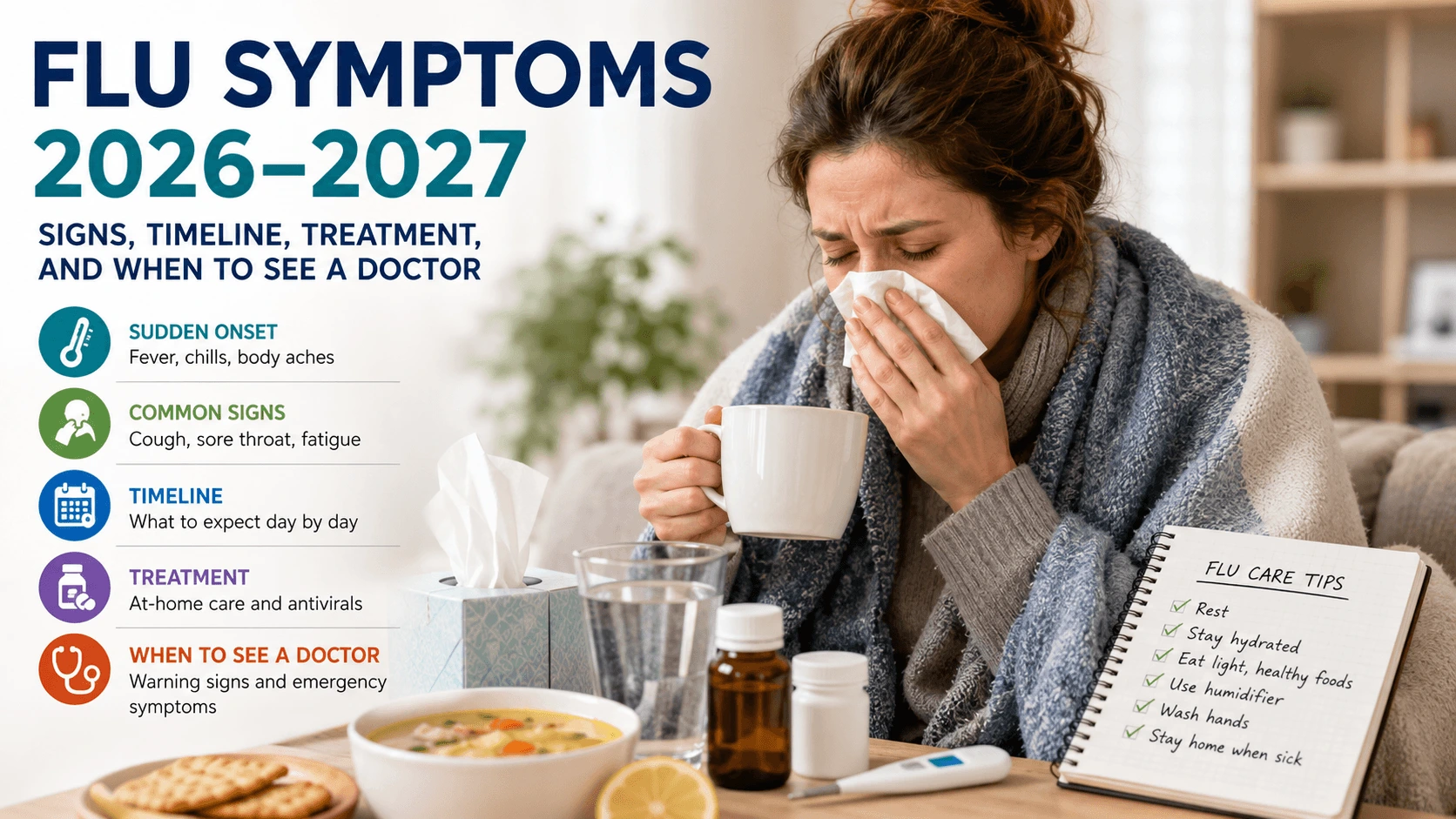
Flu symptoms can appear suddenly and make you feel very unwell within hours. Understanding the most common influenza symptoms, how the illness usually progresses, and when to seek medical help can make recovery safer and faster.
Influenza, commonly called the flu, is a contagious respiratory infection that affects the nose, throat, and lungs. It spreads through respiratory droplets when an infected person coughs, sneezes, talks, or breathes near others.
What Is the Flu?
Influenza Explained
Influenza is a viral infection that mainly affects the nose, throat, and lungs. It spreads through respiratory droplets when an infected person coughs, sneezes, talks, or breathes close to others.
The flu is different from a common cold because it tends to start more suddenly and cause stronger symptoms. People often go from feeling fine to feeling exhausted, feverish, and achy in a very short time.
Why Flu Symptoms Matter
Recognizing flu symptoms early is important because treatment works best when started quickly. In some cases, antiviral medication can reduce the severity and duration of illness, especially for people at higher risk of complications.
The flu can also spread easily in homes, schools, workplaces, and care settings. For that reason, understanding the signs of flu can help protect both the sick person and the people around them.
Flu Symptoms: Common Signs in 2026–2027
Most Common Flu Symptoms
The most common flu symptoms include:
- Fever or chills.
- Body aches and muscle pain.
- Headache.
- Dry cough.
- Sore throat.
- Fatigue or extreme tiredness.
- Runny or stuffy nose.
- Loss of appetite.
- Sweating.
- Weakness.
These symptoms can appear alone or together, but most people with flu feel multiple symptoms at once. That combination is one of the reasons influenza often feels more intense than a regular cold.
Less Common Flu Symptoms
Some people also experience nausea, vomiting, or diarrhea. These symptoms are more often seen in children, but adults can have them too.
Eye pain, light sensitivity, and a deep pressure behind the eyes may also occur. For readers wanting a deeper look at this symptom, see our guide on pain behind the eyes causes and treatments.
In some cases, people describe a sudden feeling of being “hit by a truck,” which reflects how quickly flu symptoms can intensify.
Can You Have the Flu Without a Fever?
Yes, it is possible to have flu without a fever. While fever is a common sign, not everyone develops one.
This is why flu should not be ruled out just because the temperature is normal. If you have sudden fatigue, body aches, cough, and other flu-like symptoms, influenza is still possible.
Flu Symptom Timeline
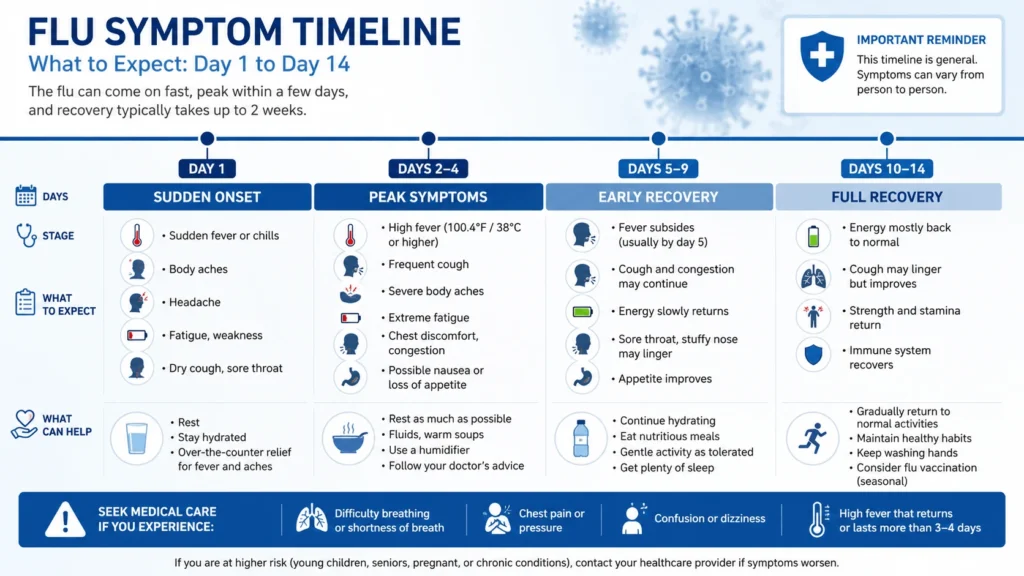
Day 1 to 2: Sudden Onset
Flu symptoms often begin 1 to 4 days after exposure, but the illness itself usually starts very quickly. Many people notice fever, chills, aches, headache, and tiredness almost all at once.
This sudden onset is one of the clearest ways to tell the flu apart from a common cold. A person may feel normal in the morning and be very sick by the afternoon.
Day 3 to 4: Peak Illness
Symptoms often become strongest around days 3 to 4. Fever may stay high, body aches may worsen, and cough or headache can become more intense.
Fatigue is often one of the most difficult symptoms during this stage. Even light activity may feel exhausting, which is why rest is especially important.
Day 5 to 7: Early Recovery
By days 5 to 7, fever often begins to improve. Some people still feel weak, tired, and congested, but the worst stage usually starts to pass.
Cough may continue even after other symptoms get better. This can be frustrating, but it is fairly common during flu recovery.
Week 2 and Beyond
Most people recover gradually during the second week, although fatigue and cough can last longer. Some people return to normal quickly, while others need more time to feel fully well.
If symptoms improve and then suddenly get worse again, it may mean there is a complication such as pneumonia or a secondary infection. In that case, medical evaluation is important.
Flu vs Cold vs COVID-19
How Flu Differs from a Cold
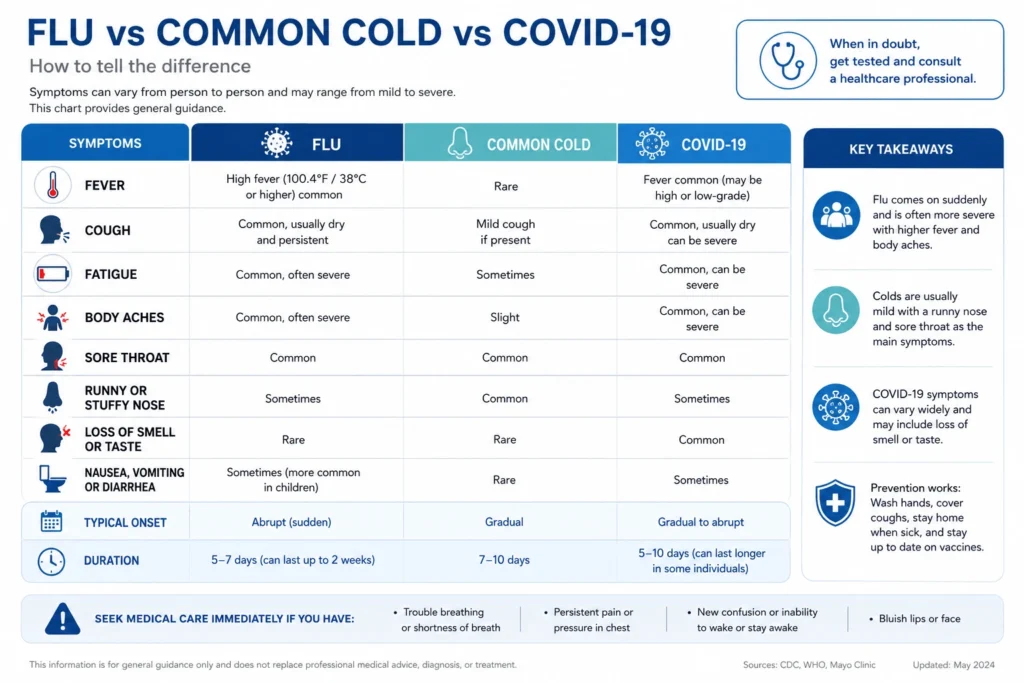
Flu and common cold symptoms can overlap, but the flu usually hits harder and faster. A cold tends to come on more slowly and usually causes milder illness.
Common colds are more likely to cause sneezing, mild sore throat, and congestion without the intense body aches and exhaustion that often come with influenza.
Flu vs COVID-19 Symptoms
COVID-19 and flu can look similar, especially early on. Both may cause fever, cough, fatigue, and sore throat.
Loss of smell or taste is more strongly associated with COVID-19, although it is not present in every case. Because symptoms overlap, testing can help if you are unsure which illness you have.
Symptom Comparison Table
| Symptom | Flu | Common Cold | COVID-19 |
|---|---|---|---|
| Onset | Sudden | Gradual | Sudden or gradual |
| Fever | Common | Rare | Common |
| Body aches | Common and often severe | Mild | Common |
| Fatigue | Often intense | Mild | Common |
| Cough | Common | Common | Common |
| Sore throat | Common | Common | Common |
| Loss of smell or taste | Rare | Rare | More common |
If you are uncertain, flu testing or a combined flu and COVID test can help clarify the diagnosis.
Key Medical Facts About Flu Symptoms
Flu Incubation Period
After exposure to the influenza virus, symptoms typically appear within 1 to 4 days, with an average incubation period of about 2 days.
This means a person can become infected and begin spreading the virus before realizing they are sick.
How Long Is the Flu Contagious?
Most adults with influenza are contagious from approximately 1 day before symptoms begin until 5 to 7 days after becoming sick.
Children and people with weakened immune systems may remain contagious for longer periods.
Average Duration of Flu Symptoms
Most flu symptoms improve within 5 to 7 days, although fatigue and cough may persist for 1 to 2 weeks or longer.
Recovery time varies depending on age, overall health, and whether complications develop.
Flu Complications
While many people recover without problems, influenza can sometimes lead to serious complications, including:
- Pneumonia
- Bronchitis
- Sinus infections
- Ear infections
- Worsening of asthma
- Worsening of heart disease
- Dehydration
Complications are more common in older adults, young children, pregnant people, and individuals with chronic medical conditions.
Flu Treatment at Home
Rest and Hydration
Rest is one of the most effective things you can do when you have the flu. Your body needs energy to fight the virus, and overexertion can make recovery harder.
Hydration is also important because fever, sweating, and reduced food intake can lead to dehydration. Water, broth, herbal tea, and electrolyte drinks can all be helpful.
Foods and Comfort Measures
Light, easy-to-digest foods may be easier to tolerate when your appetite is low. Soup, crackers, toast, rice, fruit, and yogurt are common choices during flu recovery.
A humidifier may help if dry air makes your cough worse. Warm showers or steam can also provide temporary relief for congestion, as long as you avoid burns.
For more general recovery support, you may also find these articles useful: healthy foods to eat every day and anti-inflammatory foods guide.
Over-the-Counter Symptom Relief
Some over-the-counter medicines may reduce fever, pain, or congestion. Acetaminophen or ibuprofen can help with fever and body aches, while certain decongestants or cough medicines may relieve specific symptoms.
Always follow label instructions and avoid giving medicines that are not appropriate for a child or for someone with other health conditions. If you are unsure, a pharmacist or healthcare provider can help.
Antiviral Treatment for Flu
How Antivirals Work
Antiviral medications can help reduce flu severity and shorten the duration of illness. They work best when started early, ideally within 48 hours of symptoms beginning.
These medicines are not a substitute for rest, but they can be very useful for people who are more likely to develop complications.
Who May Need Antivirals
Antiviral treatment is often recommended for:
- People at higher risk of complications.
- People with severe or rapidly worsening symptoms.
- Hospitalized patients.
- People with chronic health conditions.
- Pregnant people.
- Older adults.
- Young children in some cases.
If you fall into one of these groups, it is a good idea to contact a healthcare professional early rather than waiting several days.
When to See a Doctor
Warning Signs
Seek medical advice if you have:
- Trouble breathing.
- Chest pain or pressure.
- Confusion or difficulty waking.
- Severe vomiting.
- Signs of dehydration.
- Symptoms that improve and then return worse.
- A high fever that does not improve.
These symptoms may mean that influenza is becoming more serious or that another condition is developing.
Emergency Symptoms
Get urgent medical help immediately if breathing becomes difficult, chest pain appears, or the person becomes confused or unresponsive. In children, emergency signs may include fast breathing, bluish lips, severe lethargy, or signs of dehydration.
Do not wait if symptoms are severe or rapidly worsening. Early evaluation can make a major difference.
How to Prevent the Flu
Annual Flu Vaccine
One of the best ways to prevent influenza is to get the yearly flu vaccine. The flu vaccine does not prevent every case, but it can reduce the risk of severe illness, hospitalization, and complications.
For reliable guidance on seasonal flu prevention and vaccine information, the CDC’s flu season page is a strong authoritative reference: CDC flu season information.
Even if you get flu after being vaccinated, symptoms are often milder and shorter. That is why annual vaccination is still strongly recommended for most people.
Hygiene and Daily Prevention
Good hygiene also helps lower the risk of infection. Washing your hands regularly, avoiding touching your face, and staying away from sick people can reduce spread.
Other helpful habits include:
- Covering coughs and sneezes.
- Staying home when you are sick.
- Improving indoor air flow when possible.
- Cleaning frequently touched surfaces.
- Getting enough sleep.
Healthy Lifestyle Support
A healthy routine can support your immune system over time. Regular sleep, balanced meals, hydration, and stress management all play a role in overall resilience.
For more on supportive daily wellness habits, you can also link to holistic wellness habits and easy daily mental wellness habits.
While these habits do not guarantee you will avoid the flu, they can help your body respond better to illness and recovery.
Flu Recovery Tips
What Helps Recovery
Flu recovery is usually faster when you give your body time to rest. Avoid intense exercise, heavy work, or stressful activity while feverish or weak.
It can also help to monitor symptoms daily so you notice if anything is getting worse. If fever returns or breathing becomes harder, you should seek medical care.
Returning to Normal Activity
Most people should wait until they have been fever-free for at least 24 hours without fever-reducing medicine before returning to work, school, or normal routines. Even then, energy may still be low for a few days.
A gradual return to activity is usually better than jumping back into a full schedule immediately. Listening to your body can prevent setbacks.
FAQ About Flu Symptoms
How long does the flu last?
Most people feel better within 5 to 7 days, although cough and fatigue can last longer. Some people need one to two weeks to feel fully recovered.
Is the flu contagious?
Yes. Flu spreads easily and can be contagious before symptoms begin and for several days after.
Can the flu turn into pneumonia?
Yes. Flu can lead to pneumonia, especially in high-risk people or if symptoms worsen after initial improvement.
Does the flu vaccine work?
Yes, although it does not prevent every infection. It can reduce the risk of severe illness, hospitalization, and death.
Should I stay home with the flu?
Yes. Staying home helps protect other people and gives your body time to recover.
Conclusion
Flu symptoms 2026–2027 often begin suddenly and can become severe quickly. Knowing the early signs of influenza, understanding the flu symptom timeline, and recognizing when to see a doctor can help reduce complications and speed up recovery.
For most people, the best flu treatment includes rest, fluids, and symptom relief. For high-risk individuals, early antiviral treatment and prompt medical care can be especially important.