
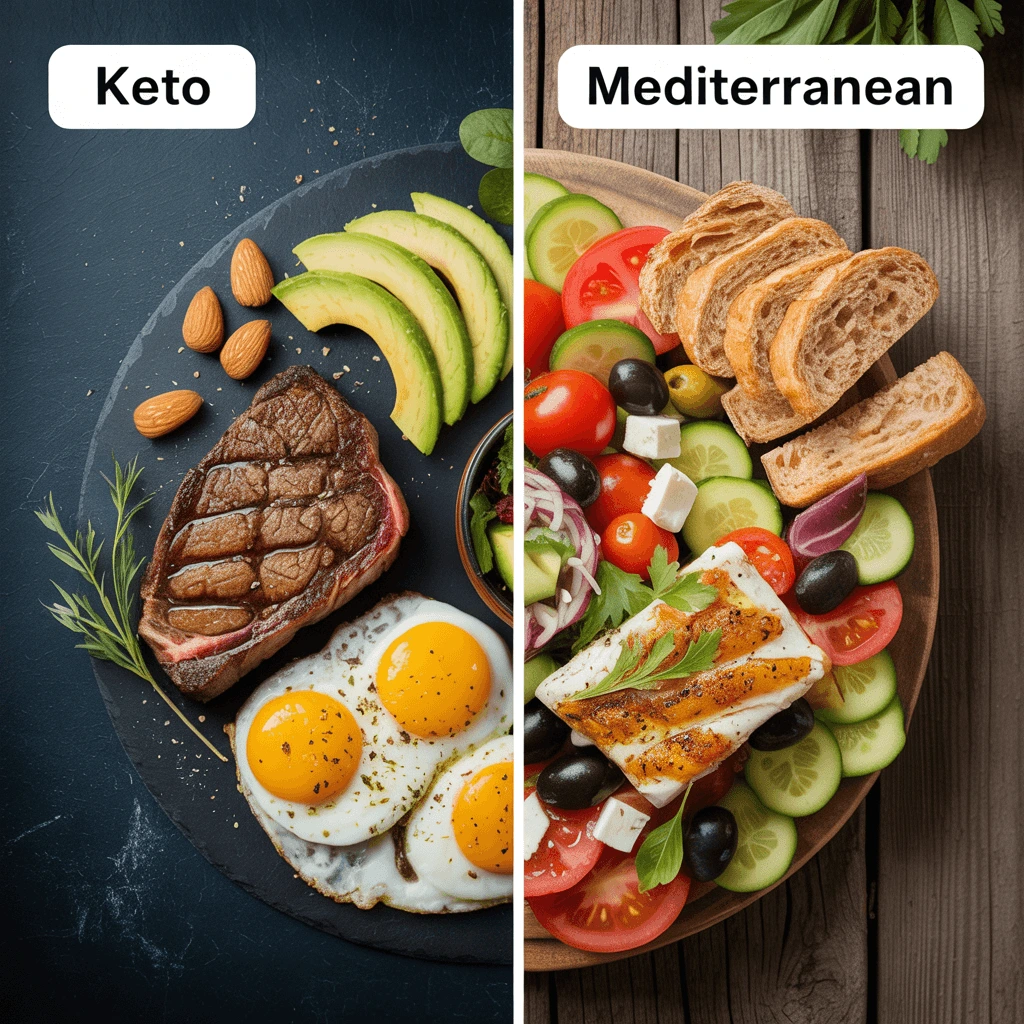
Two Philosophies, One Goal
| Feature | Keto | Mediterranean |
|---|---|---|
| Primary Goal | Rapid weight loss, metabolic therapy | Long-term health, sustainability |
| Macronutrients | 70-80% Fat, 15-25% Protein, 5-10% Carbs | Balanced: Healthy Fats, Lean Protein, Complex Carbs |
| Key Foods | Meat, cheese, avocado, low-carb veggies | Fish, whole grains, legumes, olive oil, fruits |
| Best for… | Short-term weight loss, blood sugar control (under supervision) | Heart health, longevity, family-friendly eating |
| Biggest Challenge | Restrictive, “keto flu,” hard to maintain | Portion control with calorie-dense foods like oils & nuts |
| Sustainability | Low (Short-term tool) | High (Lifelong lifestyle) |
The ketogenic (keto) and Mediterranean diets represent two of the most popular—and seemingly opposite—approaches to healthy diets. One is a strict, metabolic intervention, while the other is a flexible, lifestyle-based pattern. Both promise significant health benefits, but which one is right for you? This head-to-head comparison uses scientific evidence to crown a winner in key health categories.
To truly answer that question, we need to break down how these diets work, what you actually eat on them, and how they impact your weight and health in the short and long term. Let’s start with the fundamental differences in their philosophy.
Keto Diet vs. Mediterranean Diet : Key Differences
Macronutrient Showdown: Net Carbs vs. Balanced Nutrition
The keto Diet is a therapeutic, very low-carbohydrate, high-fat diet designed to force the body into a state of nutritional ketosis. In this state, the body becomes incredibly efficient at burning fat for energy instead of glucose.
- Macronutrient Breakdown: 70-80% Fat, 15-25% Protein, 5-10% Carbs (<50g/day).
- Primary Focus: Manipulating metabolism, strict macronutrient tracking, achieving and maintaining ketosis.
Food List: What Can You Eat?

Keto-Friendly Foods: Focus on Fat and Protein
- Fats: Oils (olive, coconut, avocado), butter, lard, mayonnaise
- Protein: Meat, poultry, fish, eggs, cheese
- Low-carb vegetables: Leafy greens, broccoli, cauliflower, zucchini
- Nuts and seeds: Macadamia nuts, almonds, walnuts, chia seeds
Mediterranean Diet Foods: Embracing Plants and Whole Grains
- Vegetables: Tomatoes, onions, eggplant, leafy greens
- Fruits: Citrus fruits, apples, grapes, olives
- Whole grains: Oats, barley, buckwheat, whole grain bread and pasta
- Legumes: Lentils, chickpeas, beans, peas
- Healthy fats: Olive oil, nuts, seeds, avocados
- Fish and seafood: Salmon, sardines, mackerel, shrimp
Keto vs. Mediterranean: A Direct Look at One Day of Eating
| Meal | Keto Approach | Mediterranean Approach |
|---|---|---|
| Breakfast | 2 eggs fried in butter with avocado and bacon | Greek yogurt with berries, walnuts, and a drizzle of honey |
| Lunch | Grilled chicken salad with olive oil, cheese, and no croutons | Quinoa salad with chickpeas, cucumber, tomatoes, feta, and lemon-olive oil dressing |
| Dinner | Salmon with asparagus sautéed in coconut oil | Baked salmon with a side of roasted sweet potatoes and a mixed green salad |
| Snack | Handful of macadamia nuts or celery with almond butter | Apple slices with a tablespoon of peanut butter or a handful of olives |
Health Benefits and Risks: A Detailed Comparison
Round 1: Weight Loss
- Keto Diet: The Short-Term Champion.
- The Evidence: Studies consistently show that the keto Diet leads to significantly greater short-term weight loss (3-6 months) compared to low-fat diets and even the Mediterranean program. The initial rapid drop is due to water loss and the body burning through glycogen stores.
- Why it Works: Ketosis suppresses appetite, and the high fat intake promotes satiety, leading to a natural reduction in calorie intake.
- Mediterranean Diet: The Long-Term Victor.
- The Evidence: While weight loss may be more gradual, the Mediterranean nutritional regimen is superior for sustainable, long-term weight maintenance . Its flexibility makes it easier to adhere to for years, not just months.
- Why it Works: High fiber content from fruits, vegetables, and legumes provides volume and fullness for fewer calories.
Winner: It depends on the timeline. Keto for short-term speed, Mediterranean for long-term sustainability.
Round 2: Heart Health
- Keto Diet: A Mixed Bag.
- The Evidence: Keto can improve several key markers: it dramatically lowers triglycerides and raises HDL (“good”) cholesterol [3]. However, it can also significantly increase LDL (“bad”) cholesterol in some individuals due to high intake of saturated fats (e.g., from red meat, butter), a major risk factor for heart disease. This requires careful medical monitoring.
- Mediterranean Diet: The Undisputed Gold Standard.
- The Evidence: The landmark PREDIMED study and many others prove the Mediterranean way of eating is powerful for primary and secondary prevention of cardiovascular disease. It reduces heart attacks, strokes, and death from heart causes. It reliably improves overall cholesterol profiles and reduces inflammation.
- Why it Works: It is rich in monounsaturated fats (olive oil, nuts) and omega-3s (fatty fish), which are proven to benefit heart health.
Winner: The Mediterranean Diet. Its heart-health benefits are consistent and well-proven without the risks associated with keto’s potential LDL increase.
Round 3: Blood Sugar and Diabetes Control
- Keto Protocol: A Powerful Tool.
- The Evidence: By virtually eliminating carbohydrates, the keto nutrition plan drastically reduces blood sugar spikes and can significantly improve insulin sensitivity and lower HbA1c levels in the short term [6].
- The Caveat: This approach requires strict medical supervision, especially for individuals on diabetes medication, to avoid dangerous hypoglycemia.
- Mediterranean Diet: A Sustainable Management Strategy.
- The Evidence: This eating pattern is highly effective for both preventing and managing type 2 diabetes [2]. The high fiber content from whole grains and legumes slows the absorption of sugar into the bloodstream, preventing sharp spikes and crashes.
Winner: A Tie. Keto offers powerful short-term glycemic control under supervision, while the Mediterranean program provides a safe, effective, and sustainable long-term strategy.
Round 4: Sustainability and Lifestyle
- Keto Diet: Highly Restrictive.
- The Challenge: The keto diet is very difficult to maintain long-term. It eliminates entire food groups (grains, most fruits, legumes), making social dining, travel, and flexibility nearly impossible for many. The “keto flu” is a common initial side effect.
- Mediterranean Health plan: Inherently Sustainable.
- The Advantage: This is arguably its greatest strength. It is not a restrictive diet but a enjoyable lifestyle. It encourages social eating, includes a wide variety of foods, and can be adapted to any cuisine or setting.
Winner: The Mediterranean Diet, by a landslide. It is consistently ranked the #1 easiest diet to follow.
The Verdict: Which way of eating Is Right For Your Goals?
- Choose the KETO if:
- Your primary goal is rapid, short-term weight loss.
- You need to manage epilepsy or certain neurological conditions (under medical care).
- You are highly disciplined and can commit to strict tracking.
- Consult your doctor first, especially if you have kidney issues or high cholesterol.
- Choose the MEDITERRANEAN if:
- You want lifelong, sustainable health and weight management.
- Your goal is to improve heart health and reduce disease risk.
- You value flexibility, enjoyment of food, and social connection.
- You are looking for a balanced, evidence-backed eating pattern for the whole family.
The Bottom Line: For most people seeking lasting health and well-being, the Mediterranean diet is the superior choice. The keto diet is a valuable but niche tool best used for specific, short-term goals under medical guidance.
FAQ: Keto vs. Mediterranean Approach
Can I combine aspects of both eating plans?
Yes, a hybrid approach is possible by focusing on high-fat, low-carb Mediterranean foods like olive oil, avocado, nuts, fatty fish, and non-starchy vegetables. However, careful planning is needed to maintain ketosis while avoiding high-carb staples like grains and legumes.
Which program is better for managing blood sugar?
Both can be effective. The Keto protocol may rapidly lower blood sugar but requires medical supervision. The Mediterranean lifestyle is often recommended as a safer long-term option due to its balanced focus on fiber-rich carbs and healthy fats.
Is the Mediterranean style more expensive?
Not necessarily. While Keto relies on pricier ingredients like meat and specialty products, the Mediterranean approach emphasizes affordable staples like beans, lentils, and seasonal produce. Buying frozen fish and canned legumes can keep costs low.
How long until I see changes?
On Keto, initial weight loss (often water weight) may occur in 1-2 weeks, with fuller effects after 3-4 weeks. The Mediterranean way offers gradual but steady results, with benefits like improved digestion and heart health within weeks to months.
Which is easier to follow in social situations?
The Mediterranean style is far more social-friendly. Its flexibility allows enjoyment of restaurants and gatherings without major restrictions. The Keto plan is much more limiting due to strict carb rules, requiring extra planning and special requests.
Are there health risks?
Keto may cause initial “keto flu,” nutrient gaps, or cholesterol changes for some. The Mediterranean approach has few risks but requires mindful portions of calorie-dense foods like oils and nuts to avoid weight gain.
Which diet is better for hormone balance in women?
The Mediterranean diet is generally more supportive for female hormone balance due to its inclusion of healthy fats, fiber, and phytoestrogens from whole foods like flaxseeds and legumes. The very high fat content of Keto can sometimes disrupt hormone levels for some women.
Can you eat fruit on keto?
Generally no, except for small portions of berries, due to sugar content
Ultimately, the best diet is the one you can maintain consistently. Use this comparison as a guide, listen to your body, and consider consulting a nutritionist to find your perfect fit for long-term health and happiness.
References:
- Estruch, R., et al. (2018). Primary Prevention of Cardiovascular Disease with a Mediterranean Diet Supplemented with Extra-Virgin Olive Oil or Nuts. N Engl J Med. https://www.nejm.org/doi/full/10.1056/NEJMoa1800389
- Kosinski, C., & Jornayvaz, F. R. (2017). Effects of Ketogenic Diets on Cardiovascular Risk Factors: Evidence from Animal and Human Studies. Nutrients. https://www.mdpi.com/2072-6643/9/5/517
Ready to Start Your New Diet? We’ve Got You Covered!
This comparison has given you the facts. Now, take the next step with our specialized recipe collections and guides to turn your decision into a practical plan.
- 👉🥑 Leaning Keto?
Dive into our curated collection of easy and delicious Keto recipes to help you begin your journey without the overwhelm.
➡️ Explore Keto Recipes - 👉 🐟 Choosing Mediterranean?
Discover the world of authentic, heart-healthy Mediterranean cooking on our dedicated site. Find balanced meal plans and tips to make it a seamless part of your life.
➡️ Expolre Mediterranean diet
For Daily Inspiration: follow us on Instagram–Facebook– youtube!