
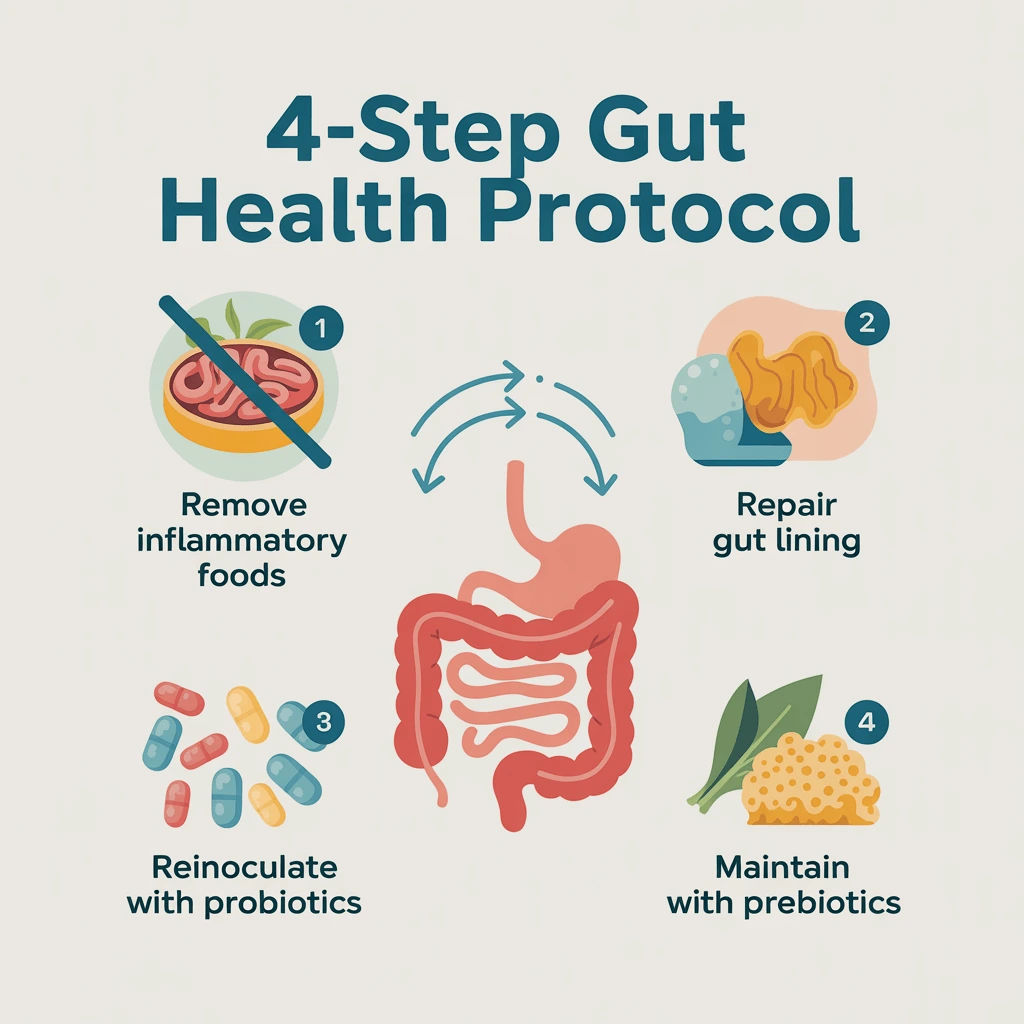
Looking for an effective gut health protocol? This comprehensive guide delivers a proven 4-tier system based on the latest digestive science.
If you’re searching for a comprehensive gut health protocol that actually works, you’ve found it. This step-by-step guide distills the latest research into a practical 4-tier system that adapts to your unique needs—whether you’re dealing with occasional bloating or chronic digestive issues.
Important Notice: I am a content creator researching health topics, not a medical professional. This article synthesizes information from scientific studies and expert sources, but it is for informational purposes only. Always consult with a qualified healthcare provider before making changes to your diet, supplements, or health routine, especially if you have existing conditions or symptoms.
Finding Your Starting Point in This Gut Health Protocol
Every gut health journey is personal, which is why this gut health protocol offers multiple entry points. Before exploring strategies, consider this foundational principle: what works for one person might not work for another. Professional guidance is key to personalization.
This gut health protocol addresses four common scenarios:
- The Bloated Professional (Tier 1 of our protocol)
- The Post-Antibiotic Recovery (Tier 2 focus)
- The Wellness Optimizer (Tier 3 approach)
- The Chronic IBS Sufferer (Tier 4 comprehensive protocol)
Each path through this gut health protocol differs**, ensuring personalized recommendations.
A Note on Self-Assessment: While online quizzes are popular, they are no substitute for a professional evaluation. If you experience persistent symptoms like frequent bloating, pain, or major changes in bowel habits, your first step should be a conversation with a doctor.
Part 1: The Foundational Principles of Gut Health
This framework organizes information from top nutritionists and gastroenterologists. Think of it as a learning pyramid, not a strict prescription.
Layer 1: The Universal Basics (Weeks 1-2)
Research consistently highlights these non-negotiable habits that support digestive function for most people.
1. Mindful Hydration & Eating
- Hydration: Adequate water intake supports mucosal lining and digestion. A common general guideline is to drink according to thirst and ensure pale yellow urine.
- Mindful Eating: Studies in The American Journal of Gastroenterology suggest eating slowly and without distraction can reduce functional dyspepsia symptoms. It allows your body to enter the “rest-and-digest” state.
2. Prioritizing Whole Foods
- A common first step in many dietary approaches is reducing ultra-processed foods, which are often low in fiber and high in additives.
- Focusing on cooking more meals at home naturally increases intake of vegetables, legumes, and whole grains—all beneficial for gut microbes.
What Many Articles Overlook: The “Gut-Clock” Concept
Emerging chronobiology research suggests our digestive system has a daily rhythm. For instance:
- Morning: Might be a good time for soluble fiber (like oats) to gently stimulate digestion.
- Midday: Digestive enzyme activity is often highest, which could make it an optimal time for your largest meal.
- Evening: Lighter, earlier dinners may align better with slowing digestion before sleep.
Layer 2: Targeted Dietary Exploration (Weeks 3-6)
This is where personalization becomes critical and medical guidance is most valuable.
The 4R Framework (A Common Functional Nutrition Model):
- Remove: Temporarily eliminating common irritants (like gluten, dairy, or specific high-FODMAP foods) is a diagnostic tool, not a permanent diet. It should be done methodically, ideally with a dietitian’s help, to identify true triggers without creating unnecessary restrictions.
- Replace: Supporting digestion with things like digestive enzymes or bitter foods (arugula, apple cider vinegar) before meals is based on traditional practices. Important: Betaine HCL supplementation should only be considered under professional supervision to avoid harm.
- Reinoculate: Probiotics are strain-specific. Lactobacillus rhamnosus GG has robust evidence for antibiotic-associated diarrhea, while Bifidobacterium infantis is studied for IBS. A healthcare provider can help match strain to need.
- Repair: Nutrients like L-Glutamine and Zinc Carnosine are studied for gut lining support in clinical settings. Their need and dosage should be individualized.
The Missing Discussion: The Testing Landscape
If basic strategies don’t help, a doctor might recommend tests to rule out conditions like SIBO (via breath test), Celiac disease, or inflammatory markers (via stool test like calprotectin). Self-ordering tests without clinical context can lead to misinterpretation.
Layer 3: Building Resilience & Diversity (Weeks 7-12)
Long-term gut health is about diversity and adaptability.
The Fiber and Polyphenol Spectrum
Gut microbes thrive on variety. Instead of focusing on single “superfoods,” aim for a rainbow of plant foods across the week. Different fibers (from berries, greens, nuts, legumes) feed different bacterial families.
The Critical Mind-Gut Connection
Science confirms the vagus nerve is a direct highway between brain and gut. Stress management isn’t just “good advice”—it’s gut therapy. Techniques like diaphragmatic breathing, meditation, or humming may improve gut motility via this nerve, offering a free and powerful tool often missing from supplement-focused guides.
Layer 4: Fine-Tuning & Individual Optimization
Following a structured gut health protocol** is crucial because most approaches fail to provide proper personalization and progression. This pyramid method ensures you build correctly.
This is advanced territory, best navigated with expert support.
Considerations Include:
- Cyclical Eating Patterns: Research on intermittent fasting’s effect on the gut microbiome is ongoing and mixed. It may help some but disrupt others.
- Advanced Ferments: Introducing a variety (kefir, kimchi, tempeh) can increase microbial diversity.
- Targeted Prebiotics: Specific fibers like PHGG or resistant starch can be helpful but must be introduced slowly.
Part 2: When to Seek Professional Guidance
This is the most crucial missing element in most online content.
Consult a Doctor Immediately If You Experience:
- Unexplained weight loss
- Blood in stool
- Severe abdominal pain
- Symptoms that wake you from sleep
- Family history of IBD or colon cancer
A Registered Dietitian (RD) or Nutritionist Can Help With:
- Designing a personalized elimination diet without nutrient deficiencies
- Interpreting food sensitivity tests in the context of your full diet
- Creating a sustainable, diverse meal plan
- Guiding evidence-based supplement use
Part 3: A Sample Week of Gut-Supportive Eating
This is an educational example, not a prescription.
The goal is to illustrate variety and balance:
- Monday: Lentil soup with kale, served with a side of sauerkraut.
- Tuesday: Baked salmon with roasted asparagus and quinoa.
- Wednesday: Chickpea and vegetable curry with brown rice.
- Thursday: Turkey and avocado wrap with a large side salad.
- Friday: Homemade pizza on whole-wheat crust with mushrooms and peppers.
- Saturday: Stir-fried tofu with broccoli, bell peppers, and ginger over soba noodles.
- Sunday: Roast chicken with sweet potato and Brussels sprouts.
Key Principle: Notice the rotation of protein sources (legumes, fish, poultry, tofu) and the emphasis on colorful vegetables at every meal.
Part 4: Navigating the Supplement Landscape
A Cautious, Evidence-Informed Perspective:
With Stronger Support:
- Psyllium Husk: A soluble fiber with decades of research for regularity.
- Peppermint Oil (enteric-coated): Shown in meta-analyses to reduce IBS symptoms.
- Vitamin D: Many are deficient, and adequate levels support immune function in the gut.
With Emerging or Mixed Evidence:
- Curcumin: Potent anti-inflammatory, but bioavailability is a challenge.
- Colostrum: Interesting for athletic recovery, but more research is needed for general use.
- “Leaky Gut” Blends: Often contain a mix of herbs and nutrients; the overall formulation lacks standardized research.
Professional Guidance Is Key: Supplements can interact with medications and are not risk-free. A doctor or pharmacist can review your full list.
Why This Gut Health Protocol Works Differently
Unlike generic advice, this gut health protocol combines three essential elements most plans miss: personalized progression, evidence-based supplementation timing, and proper testing guidance. That’s what makes this gut health protocol effective for long-term results rather than temporary fixes.
Final Thoughts & A Responsible Path Forward
Gut health is a marathon, not a sprint. The most powerful step you can take is to build a partnership with a healthcare team that includes a primary care physician and possibly a gastroenterologist and dietitian.
Immediate, Safe Actions You Can Take:
- Start a Food & Symptom Journal: Note what you eat, your stress levels, and how you feel. This objective data is invaluable for you and any professional you consult.
- Master the Basics: Prioritize sleep, manage stress with daily breathing exercises, and chew your food thoroughly.
- Increase Plant Diversity: Add one new vegetable or legume to your diet each week.
- Schedule a Check-Up: Use your journal to have a productive conversation with your doctor about your digestive health goals and concerns.
Remember: The internet is full of dramatic gut-healing claims. True healing is often gradual, nuanced, and requires professional oversight. Your health is worth that investment.
Disclaimer: This article is the result of extensive research into publicly available scientific literature, expert publications, and high-authority health websites. It is intended for educational and informational purposes only and is not a substitute for professional medical advice, diagnosis, or treatment. Always seek the advice of your physician or other qualified health provider with any questions you may have regarding a medical condition.