
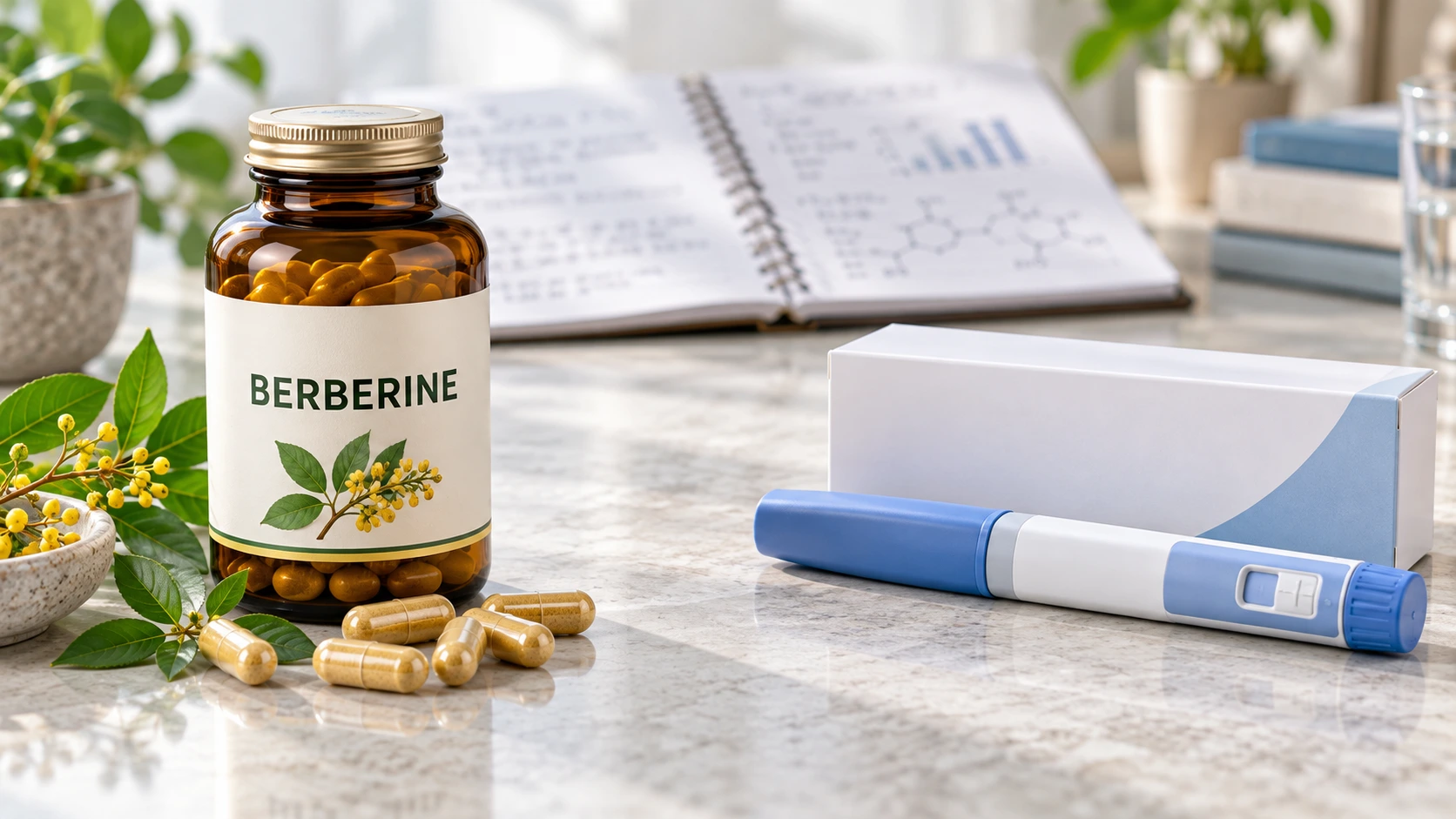
Berberine and Ozempic often appear together in discussions about blood sugar and weight loss. However, they have different mechanisms, different regulatory statuses, and different levels of supporting evidence.
This guide explains what the research can tell us, where uncertainty remains, and which safety questions to discuss with a healthcare professional.
This article provides general education, not medical advice. Do not start, stop, replace, or combine medications and supplements without professional guidance.
What Is Ozempic?
Ozempic contains semaglutide, a prescription GLP-1 receptor agonist. It helps lower blood sugar by stimulating insulin release and reducing glucagon release when glucose levels are elevated. It also delays stomach emptying.
According to the official U.S. Ozempic prescribing information, its indications include:
- Blood sugar control in adults with type 2 diabetes.
- Reduction of certain cardiovascular risks in adults with type 2 diabetes and established cardiovascular disease.
- Reduction of certain kidney and cardiovascular risks in adults with type 2 diabetes and chronic kidney disease.
Approved uses can differ by country. These U.S. indications should not be assumed to apply everywhere.
Ozempic and Wegovy: Why the Difference Matters
Both medicines contain semaglutide, but their approved uses and dosing differ.
The NIDDK guide to prescription weight-management medicines identifies Wegovy as a semaglutide treatment approved for weight management. Ozempic can reduce body weight during diabetes treatment, but it should not be described as the same weight-management product.
When reading a study, check the product, dose, treatment duration, and participants before applying its findings.
What Is Berberine?
Berberine is a compound found in plants such as barberry and goldenseal. Researchers have investigated its potential effects on glucose metabolism and body weight.
The NCCIH overview of berberine and weight loss explains that some studies report weight reductions, but inconsistent findings and study bias prevent firm conclusions.
A supplement marketed for metabolic health should not be treated as a proven replacement for diabetes medication.
For another example of how to assess supplement claims, read our Magnesium Supplement Guide.
Berberine and Ozempic: Key Differences

| Factor | Berberine | Ozempic |
|---|---|---|
| Product type | Plant compound sold in supplements | Prescription semaglutide medicine |
| Role in treatment | Not a substitute for prescribed diabetes treatment | Approved for specific medical indications |
| Evidence | Uncertain weight-loss findings | Clinical evidence supporting its approved uses |
| Weight-management distinction | Claims require careful scrutiny | Different from Wegovy |
| Safety assessment | Review supplement use with a clinician or pharmacist | Requires prescribing and medical follow-up |
This comparison is not a head-to-head clinical trial. Results from separate studies cannot establish that the products are equally effective.
Berberine and Ozempic: Side Effects and Risks?
Ozempic Risks and Precautions
Common side effects include nausea, vomiting, diarrhea, abdominal pain, and constipation.
The prescribing information also warns about pancreatitis, gallbladder problems, kidney injury associated with dehydration, and other complications. Low blood sugar risk increases when Ozempic is used with insulin or sulfonylureas.
Its boxed warning concerns thyroid C-cell tumors observed in rodents; the relevance to humans remains unknown. It is contraindicated in people with a personal or family history of medullary thyroid carcinoma or MEN2. These are examples, not a complete safety checklist.
Berberine Risks and Interactions
Berberine can cause digestive symptoms, including nausea, abdominal discomfort, bloating, constipation, and diarrhea.
It can also interact with medications. NCCIH identifies an interaction with cyclosporine, a medicine used to prevent transplant rejection.
Berberine may be unsafe during pregnancy or breastfeeding and is likely unsafe for infants. Limited long-term research means its safety cannot be assumed from its plant origin.
Our Probiotics vs Prebiotics guide explains a separate nutrition topic; it does not establish that berberine treats digestive conditions.
What Happens After Semaglutide Is Stopped?
The STEP 1 trial extension followed a subset of adults after treatment with once-weekly semaglutide 2.4 mg ended.
Participants had overweight or obesity without diabetes. During the following year, those previously receiving semaglutide regained approximately two-thirds of their earlier weight loss.
Both medication and structured lifestyle support ended, which matters when interpreting the findings. This study does not predict every individual’s outcome and should not be presented as a trial specifically of Ozempic.
Questions to Ask About Berberine and Ozempic
A discussion with your doctor or pharmacist can include:
- What condition or goal are we addressing?
- What evidence applies to my situation?
- Could this interact with my current medicines?
- What side effects and symptoms should I report?
- What follow-up will I need?
- What is the plan if treatment stops?
Bring a list of your medications and supplements, including product labels.
Frequently Asked Questions
Can Berberine and Ozempic Be Taken Together?
Do not assume the combination is safe or more effective. The references discussed here do not establish its safety or benefit. A prescriber or pharmacist should assess your medications and health history before you add berberine.
Is Berberine a Natural Alternative to Ozempic?
No. Calling berberine “natural Ozempic” implies an equivalence that the evidence does not support. They differ in how they work, how they are regulated, and what research establishes about their use.
Is Ozempic Approved for Weight Loss?
In the United States, Ozempic’s listed indications concern type 2 diabetes and certain related cardiovascular and kidney risks. Wegovy is a distinct semaglutide product with a weight-management indication. Check the current approval in your country.
Is Berberine Safe Long-Term?
Long-term safety remains uncertain. The sources cited here do not establish a standard “cycling” schedule or show that taking breaks makes prolonged use safe.
How Quickly Will I See Results?
There is no reliable timeline that applies to both products or to every person. The condition being treated, product, dose, and individual response all matter. A result reported in a study is not a personal guarantee.
Conclusion
Berberine and Ozempic should not be treated as interchangeable. Ozempic has defined prescription uses, while evidence supporting berberine for weight loss remains uncertain.
Use the research to prepare questions for your healthcare professional rather than to choose, replace, or combine treatments on your own.
Health disclaimer: Healthy Well Recipes provides general educational information and does not provide medical diagnosis or treatment. Consult a qualified healthcare professional about your symptoms, medications, supplements, or individual nutritional needs.